Author: Maurice Zemp

Today, we rejoin with Maurice Zemp who presented his work in an earlier blogpost.

Road to the Finals

I had officially completed my Matura thesis in October 2024 and submitted it to the Schweizer Jugend forscht competition. When I was selected for the semifinals, I was given the chance to present my work in front of a jury. Their feedback was highly constructive and came with clear requirements: for the finals, I would need to provide more in-depth analyses of the individual system components of my project. At first, this felt like a challenge, but in the process I realized how much these refinements elevated my research. By the time the finals approached, I felt both nervous and proud, knowing that the work I would present had grown far beyond the version I had initially submitted. On April 24, 2025, the big moment finally arrived – the start of the national finals.
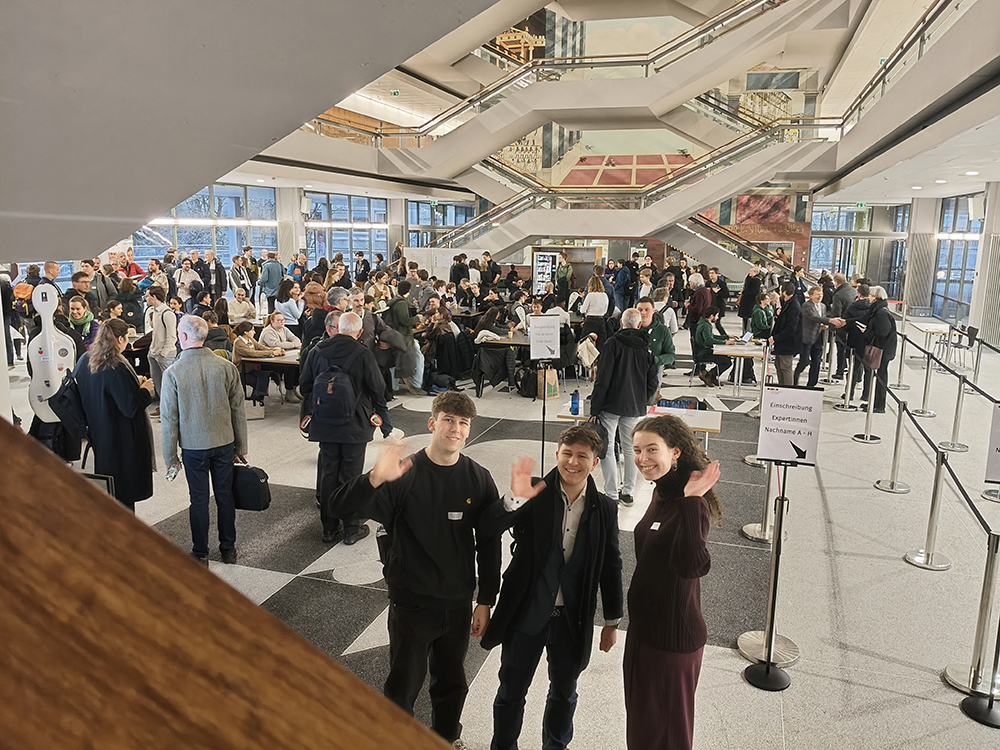
Fig. 8: The Location of the semifinals

Day 1

The day began with my journey to ETH Zurich. Traveling by public transport, I carried my Crazyflie drone and the racing gate with me – equipment that had accompanied me throughout countless hours of development and testing and with which I wanted to make the comprehension of my project a bit more feasible. Arriving at ETH, I was greeted warmly at the reception, where I first felt a sense of belonging among dozens of passionate and curious young scientists.
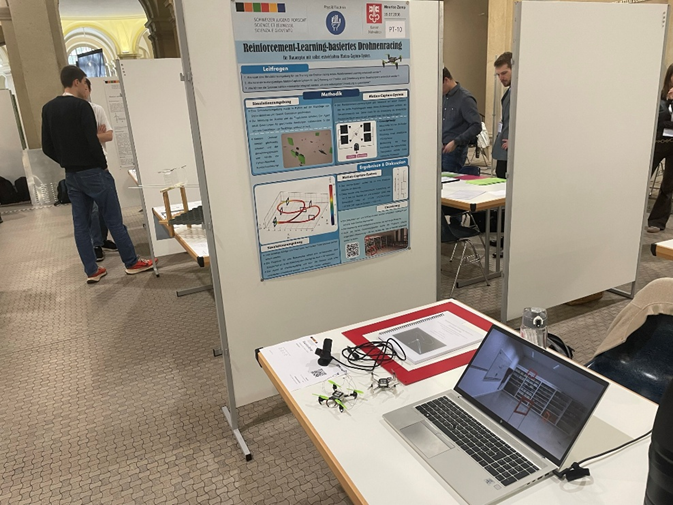
Fig. 9: My booth at ETH

The morning was dedicated to setting up our booths. Piece by piece, the exhibition hall transformed into a vibrant space filled with prototypes, posters, and creative ideas. Once my own stand was ready, I finally had a moment to take in the atmosphere and to start the first conversations. In the afternoon, we were treated to a guided city tour through Zurich. Walking through the old streets, hearing stories about the city, and enjoying the fresh air was the perfect opportunity to get to know the other participants better.
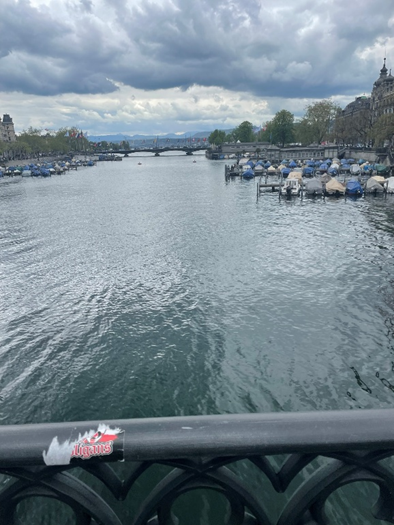
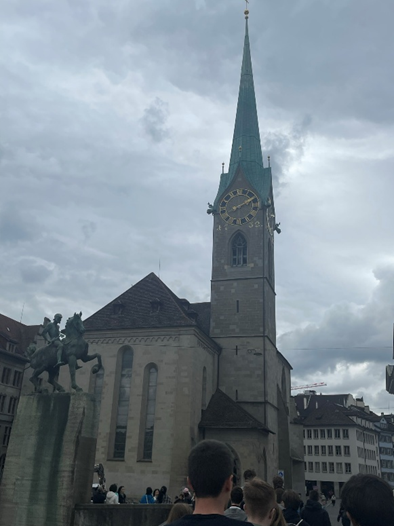
Fig. 10: The Limmat (River in Zurich)
Fig. 11: The Grossmünster church in Zurich

Later that day, alumni of Schweizer Jugend forscht visited the exhibition. For the first time, I had the chance to present my project outside of the jury context, and I was surprised by the interest and thoughtful questions I received.

By the time we arrived at our youth hostel late in the evening, the excitement of the day had fully caught up with me. Exhausted but exhilarated, I fell into bed.

Day 2

The second day began with breakfast at the youth hostel, followed by a short tram ride back to ETH Zurich. The morning program was dedicated to the jury sessions, which represented one of the most important parts of the entire competition. Unlike in the semifinals, where I just explained my project and was asked some general questions, this time I was able to discuss my project in detail with several experts – including those specializing in fields beyond my own topic.
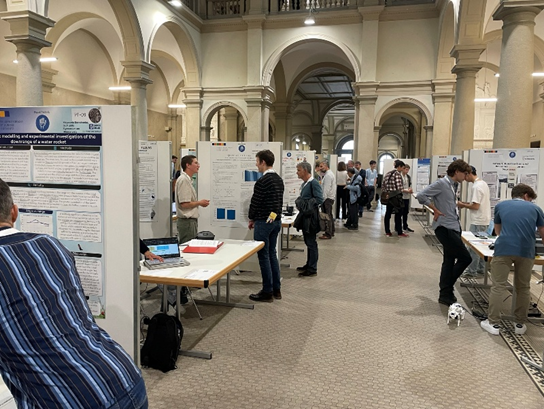
Fig. 12: The ETH Main Hall filled with interesting projects

These conversations quickly turned into fascinating discussions. The jurors asked insightful questions, challenged certain assumptions, and encouraged me to think more deeply about the potential applications of my work. At the same time, I received a great deal of praise, which was both reassuring and motivating. It was incredibly rewarding to see that months of effort, refinement, and problem-solving were being recognized by experienced professionals.

In the afternoon, the doors of ETH opened to the public for the exhibition. Friends, family members, and curious visitors from outside the competition came to explore the stands. Presenting my project in this setting felt very different from the formal jury discussions of the morning – it was more relaxed, conversational, and filled with spontaneous questions. I especially enjoyed seeing how people unfamiliar with drone technology reacted to the project, and it gave me the chance to practice explaining complex ideas in a way that was accessible to everyone. After such a full day of interactions, we returned to the youth hostel in the evening. The atmosphere there was much calmer, as everyone tried to recharge a little energy in preparation for the final day.
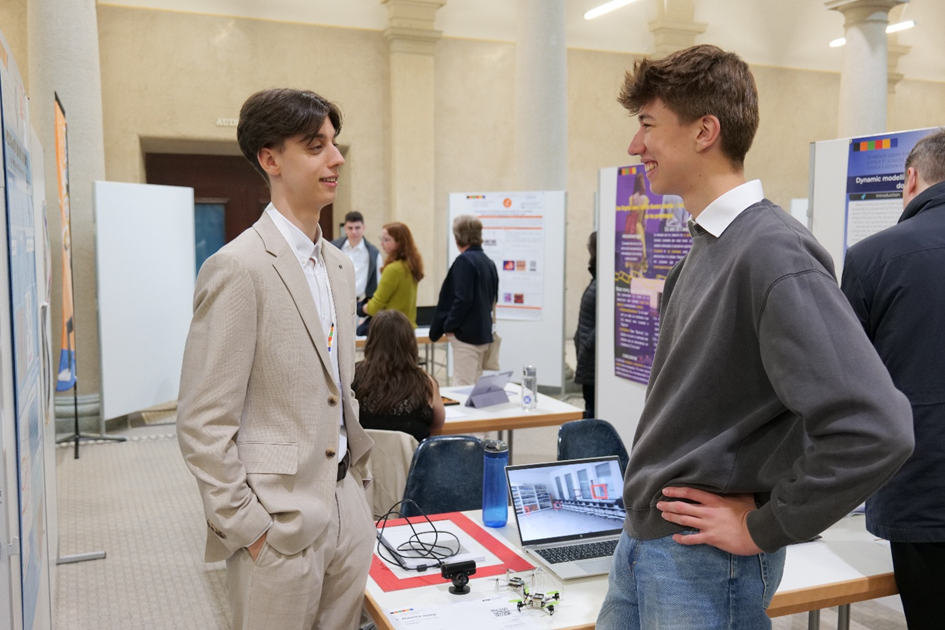
Fig. 13: Me explaining my project to a friend of mine who came to visit me

Day 3

The final day once again began with our journey to ETH Zurich. In the morning, the exhibition hall opened its doors for a second round of public visits. This time, the experience was especially meaningful for me, as my family came to see my project in person.

After lunch, it was finally time for the highlight of the competition: the award ceremony. A live band set the stage, and soon the opening speeches began. The tension in the room was almost tangible – every participant knew that months, if not years, of work were culminating in this single event. I felt both nervous and excited, my heart beating faster with each passing moment.
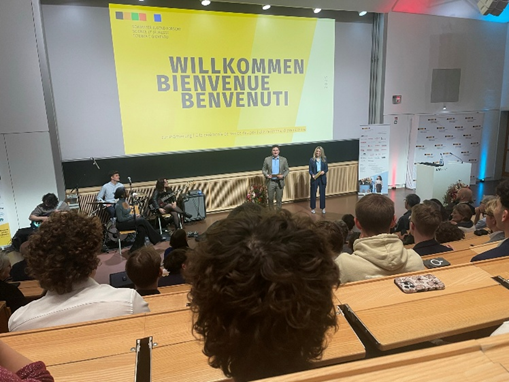
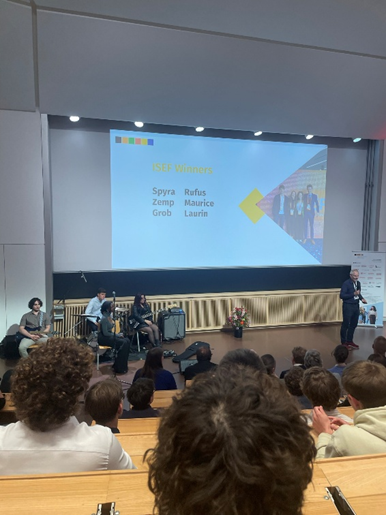
Fig. 14: The start of the award ceremony
Fig. 15: My nomination to ISEF 2026!

Then came an unexpected twist: even before the regular prizes and certificates were announced, the jury revealed the winners of the most prestigious special awards. To my immense joy, my name was called. I had been selected to represent Switzerland at the International Science and Engineering Fair (ISEF) 2026 in Phoenix, Arizona. The sense of relief, excitement, and pride I felt in that moment is difficult to describe – it was a dream come true.

The ceremony continued with an inspiring keynote by former NASA Director Thomas Zurbuchen, who shared his journey in science and reminded us of the importance of perseverance and never giving up.
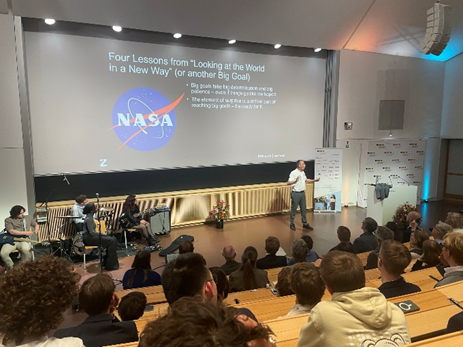
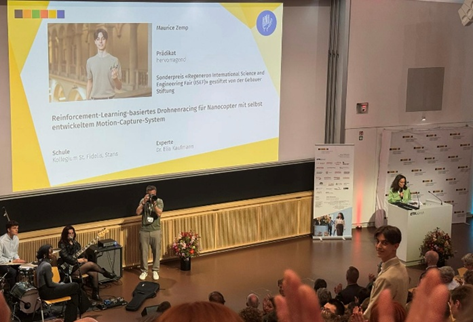
Fig. 16: An inspring talk by Thomas Zurbuchen
Fig. 17: Me being awarded my distinction

Finally, the time came for the official certificates. One by one, every participant was called to receive their recognition. When my turn came, I was awarded the highest possible distinction: hervorragend (outstanding) honored with CHF 1500. The applause and congratulations that followed made the moment even more unforgettable.

The evening concluded with an apéro, where I had the chance to exchange thoughts with professors, fellow participants, and many guests. I was overwhelmed by the warm words of encouragement and congratulations I received for both my project and the recognition it had achieved.

After three exciting, inspiring, and at times exhausting days, it was finally time to return home – this time together with my parents, carrying not only my luggage but also an experience that I will cherish for a lifetime.
Today, we welcome our first blog post by Maurice Zemp. Stay tuned for more of his adventures later!

When I started working on my Matura thesis (a mandatory project in Swiss High School), I wanted to create something that went beyond a purely theoretical project. I was fascinated by the idea of combining cutting-edge technology with a very tangible and exciting challenge: making a small drone fly through a racing course, composed by small gates, completely on its own and as fast as possible. Inspired by the work under Prof. Davide Scaramuzza, I set off for a challenge to find some new alternatives or improvements, while developping my approach from scratch.

What may sound simple at first quickly turns into a highly complex task. A drone needs to perceive its environment, process information in real time, and decide on precise actions within fractions of a second, all without human intervention. Professional drone racing pilots train for years to master this level of control. My goal was to see whether artificial intelligence could achieve something similar, using reinforcement learning as the core technique.

But there was another challenge: I wanted to design a system that wasn’t only powerful, but also affordable and reproducible. Many research institutions use equipment worth tens of thousands of francs for projects like these. I asked myself: Could I build something comparable with a fraction of the budget, and still push the boundaries of what’s possible?

That question became the driving force behind my project, which later brought me all the way to the finals of Schweizer Jugend forscht (short SJf) and saved me a place as the main prize to represent Switzerland at the world’s biggest Youth Science Competition, ISEF 2026. Over the following sections, I’ll share how I built my system step by step, what it was like to present it at the competition, and how it felt when all the effort finally paid off.

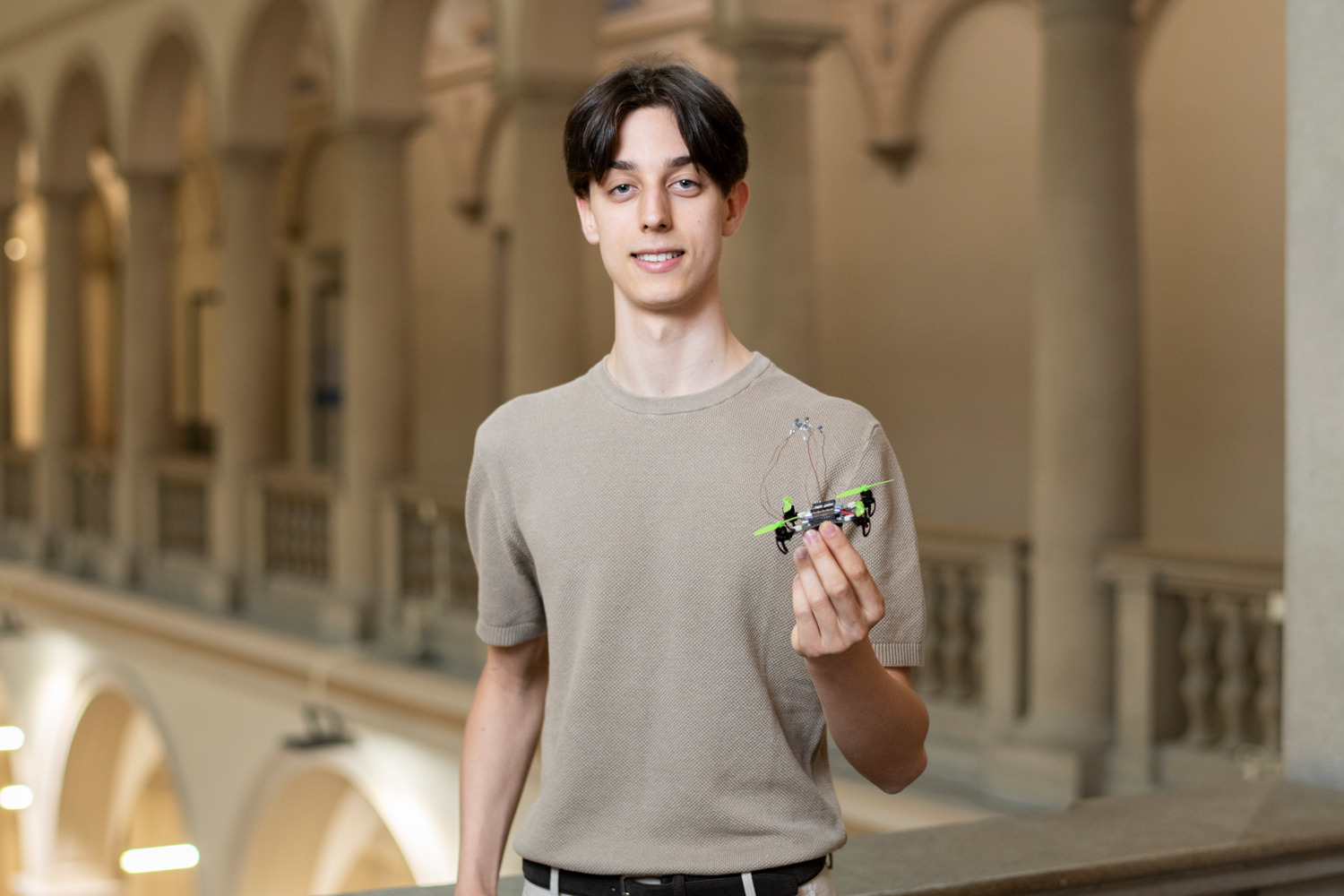
Fig. 1: Me with the Crazyflie 2.1 Brushless in the halls of ETH Zurich, where the main event of SJf took place.

Motivation and Objectives

The project I presented at Schweizer Jugend forscht was the result of my Matura thesis, in which I set out to combine my interests in drones, programming, and artificial intelligence. My goal was to develop a complete system for autonomous drone racing, based on Reinforcement Learning (RL), that would not only work in simulation but could also be transferred to real-world conditions.

To achieve this, I focused on three key aspects:

  1. Building a highly efficient simulation environment for training a reinforcement learning agent.
  2. Developing a cost-effective motion-capture system (MoCap) capable of tracking a drone’s position and orientation in real time with high precision.
  3. Integrating both systems in a way that would allow seamless transfer from simulation to real-world experiments with minimal latency.

This combination made the project unique: instead of relying on expensive commercial hardware, I set out to create a solution that would be precise and affordable but still continue the state-of-the-art development in Drone Racing.

Simulation Environment

The simulation was implemented in Python, using Stable Baselines, OpenAI Gymnasium, and NumPy, accelerated with Numba for performance. At its core, the system employed the Proximal Policy Optimization (PPO) algorithm, a state-of-the-art reinforcement learning algorithm known for stability and efficiency.

Unlike general-purpose simulators such as Gazebo, my environment was designed specifically for drone racing. It could process tens of thousands of interactions per second, enabling a training run of a few dozen minutes to correspond to nearly a year of simulated flight time.

Key features included:

  • A physics-based flight dynamics model accounting for thrust, drag and gyroscopic effects.
  • A carefully engineered reward function balancing speed, precision and avoiding shortcuts.
  • A flexible design that allowed different gate sequences and drone parameters to be tested.
  • A multi-agent environment computing on multiple threads, leading to much shorter training time needed.
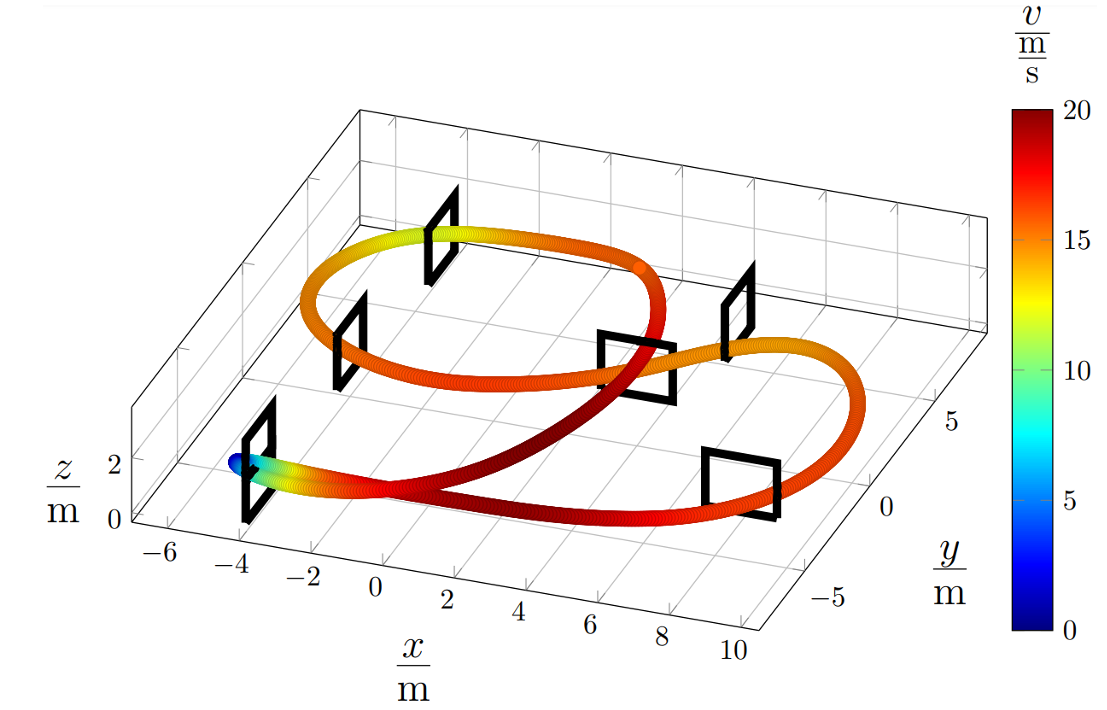
Fig. 2: Path of the drone after two hours of training on a given track

With this setup, an RL agent could learn to complete arbitrary racing tracks in near-optimal time1 after only a few hours of training. In simulation, top speeds of up to 100 km/h were achieved, though these exceeded the physical limits of the real drone and were generated with modified drone parameters.

Motion-Capture-System

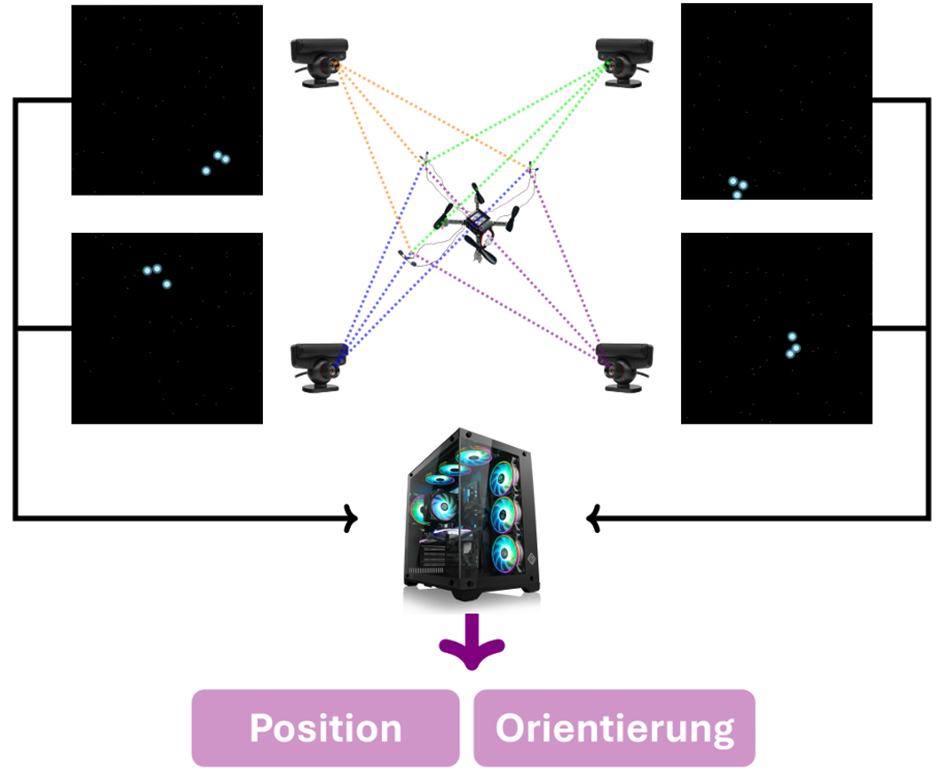
A second cornerstone of the project was the development of a low-cost motion-capture system. Instead of relying on high-end solutions such as VICON or OptiTrack (which can cost tens of thousands of Swiss francs), I built a custom setup. The drone – a Crazyflie 2.1 Nanocopter (later a Crazyflie 2.1 Brushless) – was fitted with infrared diodes. With four cameras capturing at 120 frames per second, the drone’s position was calculated in real time through triangulation. By using three diodes arranged on the drone, I not only wanted to estimate the position but also the orientation. Unfortunately, due to the cameras being budget and thus not having a high-end resolution, the estimation of the orientation was not feasible and was therefore taken from the onboard IMU.

Fig. 3: Motion-Capture-System Concept

System Integration

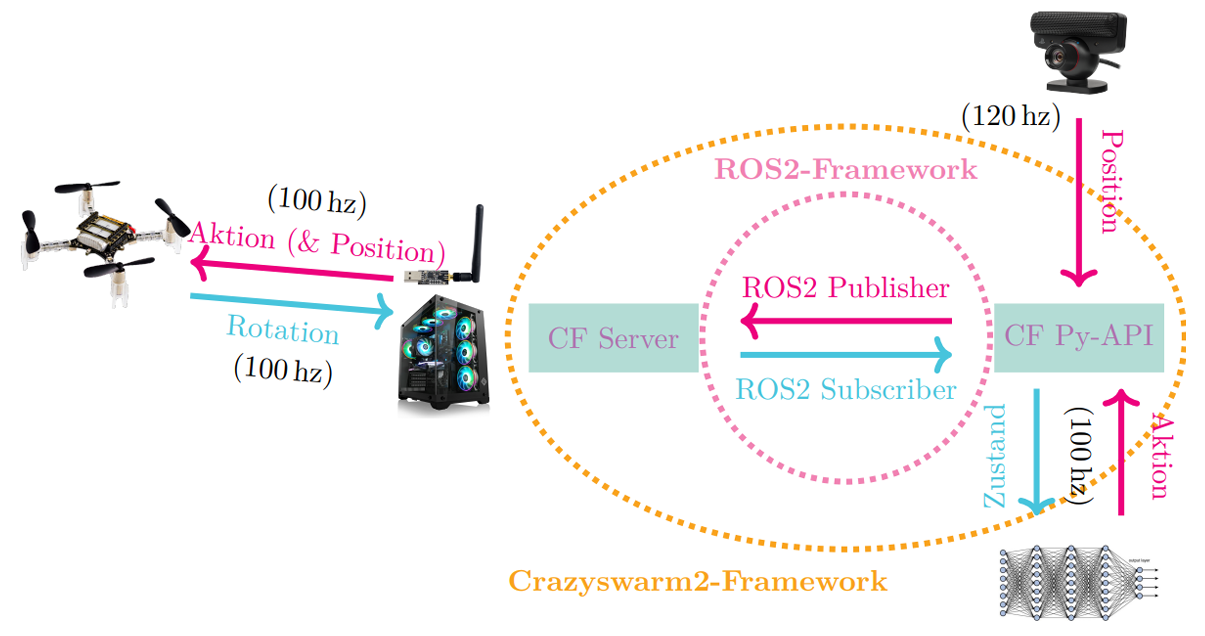
For integration, I relied on the ROS2 middleware and the Crazyswarm2 framework, which allowed the simulation and MoCap data to be processed together with minimal latency. This setup ensured that a policy trained in simulation could be executed on the real drone almost seamlessly.

Fig. 4: Sim2Real Integration Concept

Results & Discussion

The results demonstrated the effectiveness of the combined system:

  • In simulation, the RL agent completed tracks in nearly optimal time1, demonstrating robust generalization across different gate sequences.
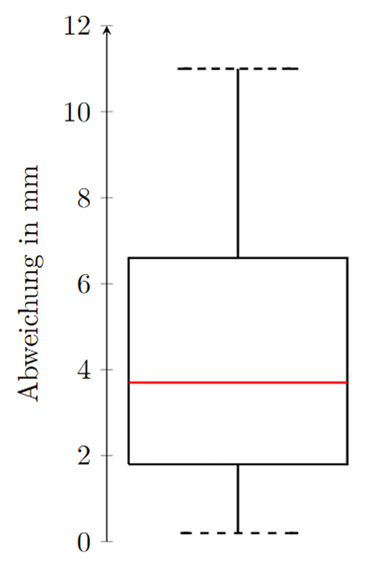
  • The motion-capture system delivered millimeter-level accuracy and reliable tracking in real time despite its simplicity. (see Fig. 5)
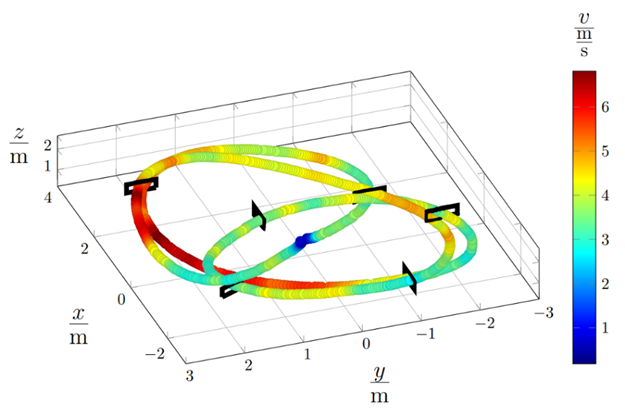
  • In real-world tests, the Crazyflie drone successfully completed tight gate sequences, even at speeds of up to 25 km/h, with a positional deviation of only 5–12 cm compared to the simulated trajectories. (see Fig. 6)

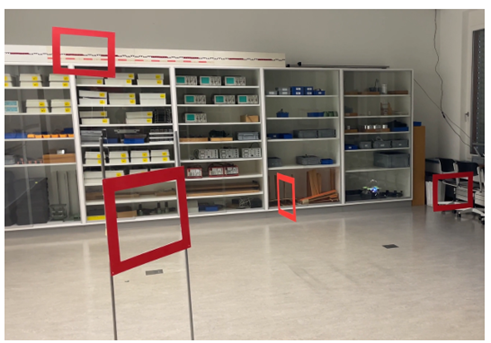
Given that the gates were roughly A3-sized openings (38 × 29 cm), the precision was sufficient to consistently hit every gate, confirming the feasibility of transferring simulated training into real-world racing. (Video)

Fig. 5: Boxplot of the deviation for collected points on a plane in millimeters
Fig. 6: Tracked Real Life Path on a given track
Fig. 7: Realisation in my school’s physics laboratory

The system demonstrated that RL-based controllers can generalize effectively from simulation to reality, even with imperfect models. This robustness shows that RL is promising for real-world robotics applications where exact physical modeling is difficult or costly. To further investigate this robustness, I conducted ablation studies in simulation focusing on aerodynamic drag, as well as analyses of the MoCap system’s accuracy in measuring dynamic motion.

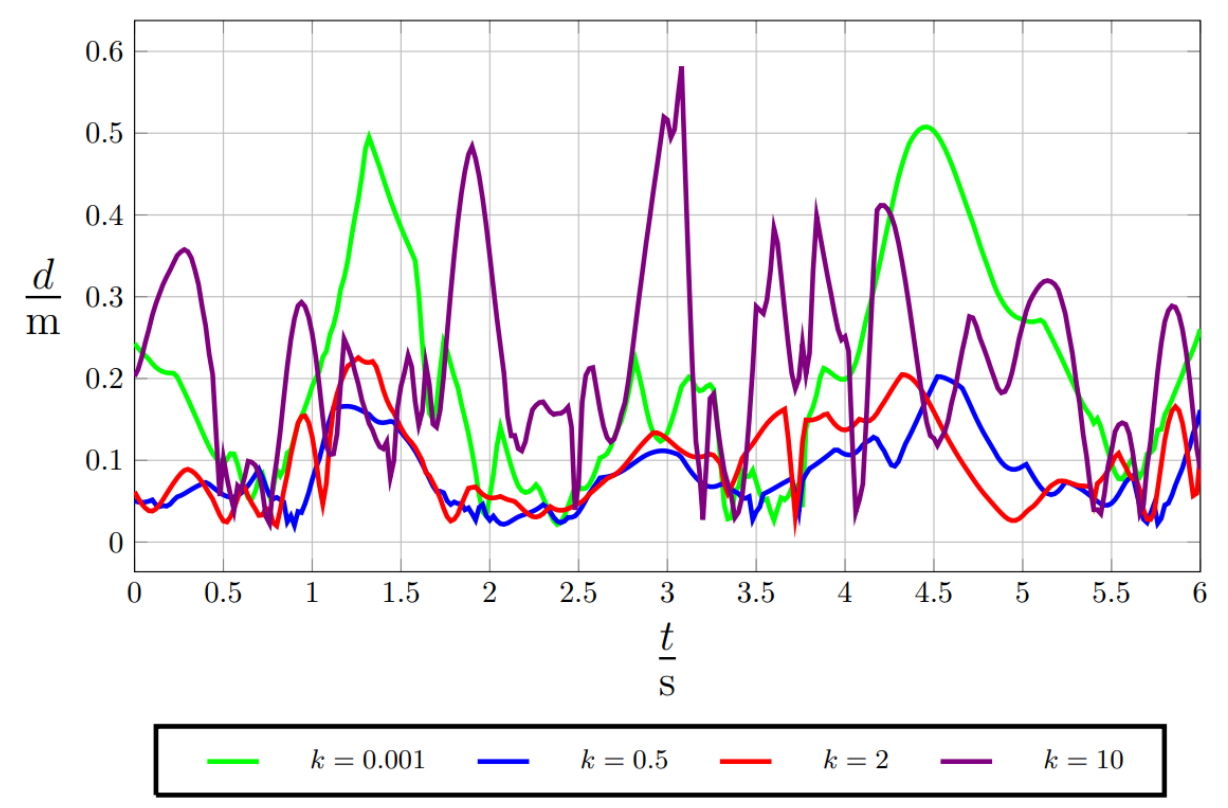
  • As for the aerodynamic drag, I introduced some randomness during evaluation, which deviated largely from what the Algorithm had trained upon. To achieve this, I introduced a parameter k which was multiplied with the correct aerodynamic drag to view how these differences would impact the flight. In Fig. 8 you can see the deviation from the real path over the course of a flight. As obviously more drag results in lower velocities, the two paths had to be fitted using the nearest two possible points. The results are impressive, even with an enormous change to training such as k = 10 the flight still performed somewhat okay, even though the gates probably wouldn’t have been hit anymore.
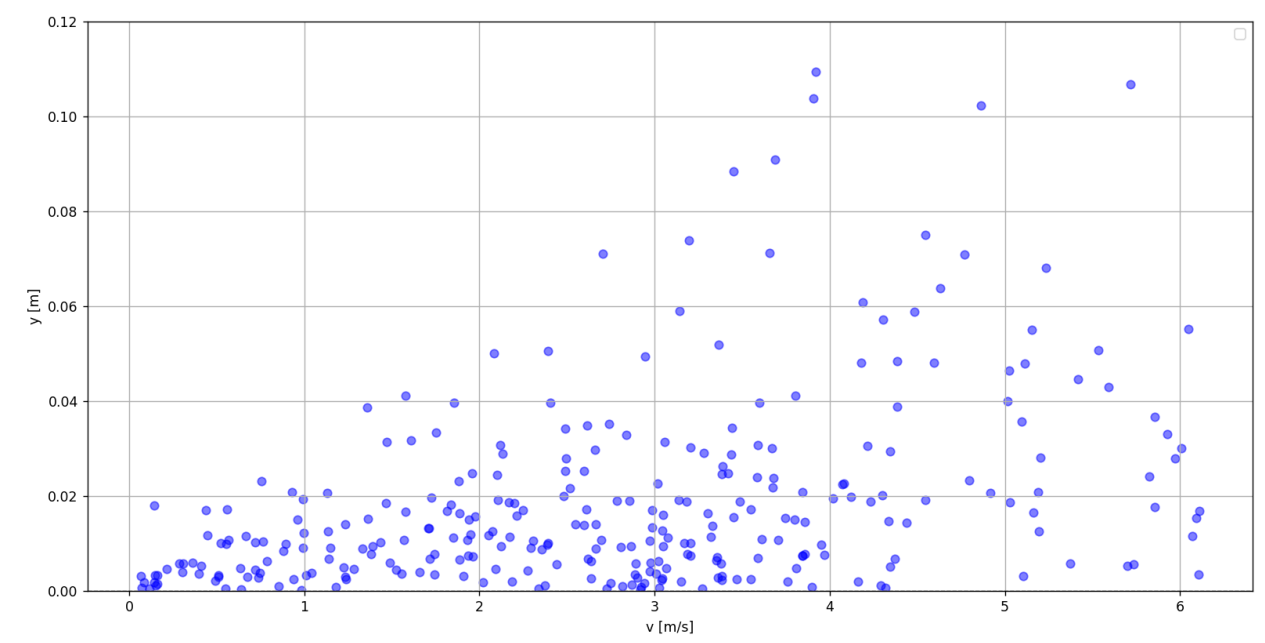
  • For the MoCap System, I used a mathematically representable motion, such as a pendulum. Then I performed a parameter optimization on this mathematical model and measured the deviation based on the current speed. There is a clear correlation between speed and deviation (see Fig. 9), which most likely was caused by the missing calibration of the cameras.
Fig. 8: Results of ablation studies on aerodynamic drag
Fig. 9: Experiment to confirm correlation between deviation and speed

Conclusion and Reflection

This work demonstrates that RL, combined with accessible hardware, enables precise and robust autonomous flight in dynamic indoor environments. The results underscore the potential of low-
cost robotics solutions to democratize drone research. Even though it was a large project and there were some hard times, I enjoyed working on it a lot and believe that the result and the memories made with it are even more rewarding than any prize money!

Acknowledgments

To end this guest post, I want to sincerely thank Bitcraze for their amazing work and support during the development of this project. They have genuinely built such an incredible testbed for research in autonomous drones, it’s amazing! Without them, this project wouldn’t have worked out the way it did!

  1. Near-optimal time here references to the theoretical boundary of a drone completing this track, given it’s parameters. To be clear, this is not fitting a polynomial with boundaries on their derivatives onto gate segments, as it was done during earlier approches in the 2010s. It was compared to multiple previous approches by UZH RPG such as Optimal Control (OC). Nevertheless, this comparison could be done more extensively in the future, as time ran short in the end. ↩︎