Author: Barbara

It’s that time of year again! ICRA 2026 (IEEE International Conference on Robotics & Automation) is just around the corner, and this year we’re heading to Vienna. We couldn’t be more excited about this one: Vienna is an incredible city, and we’ve been working on some things we can’t wait to share.

June 1–5, 2026. Come find us!

A reproducible testbed for aerial robotics research

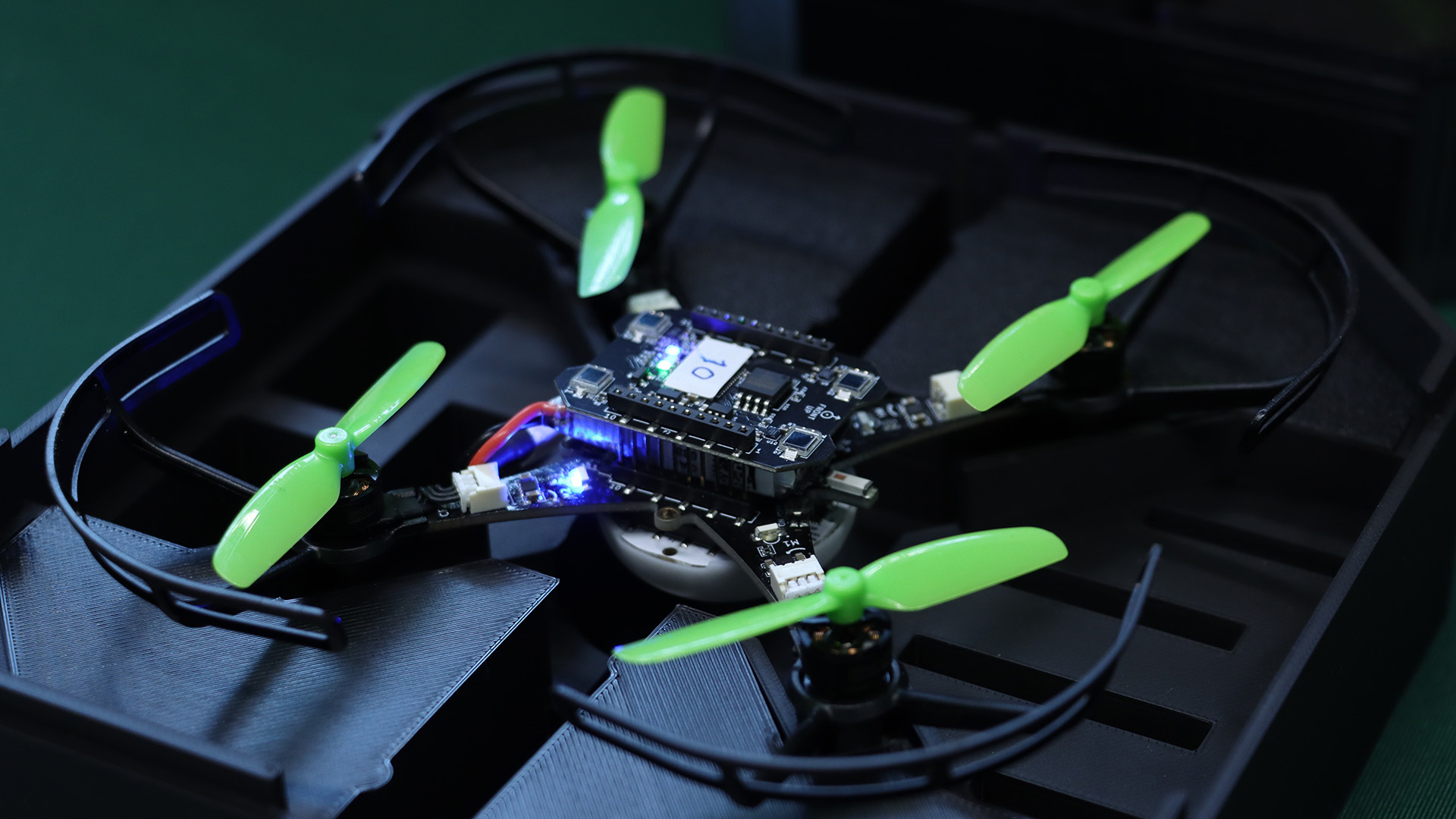
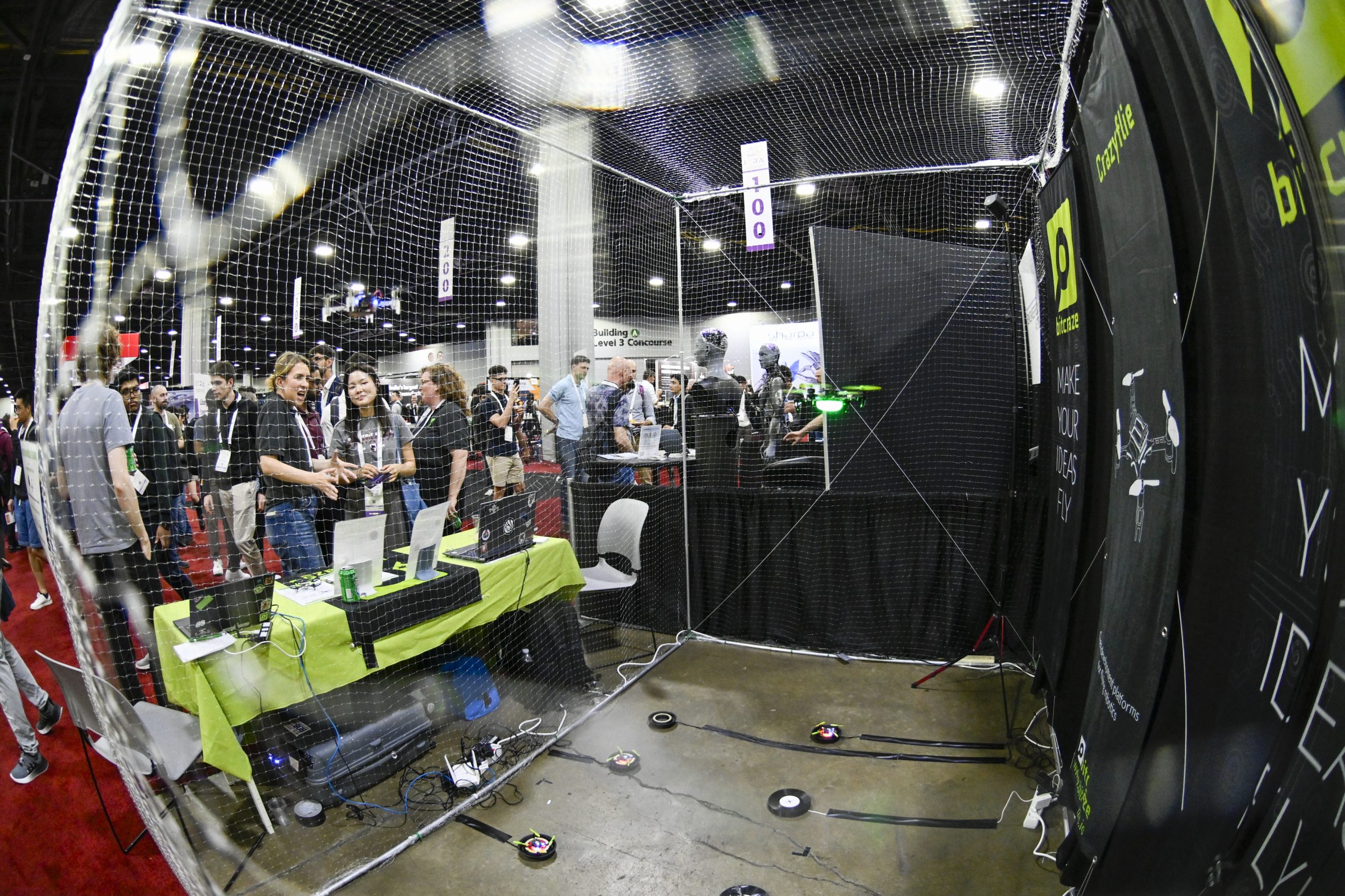
We will be running a live autonomous flight system based on the Crazyflie platform.

The focus is not the flight itself, but what it enables. The system provides a controlled indoor environment where experiments can be repeated, variables isolated, and results compared over time.

This is aligned with how aerial robotics research is actually conducted: iteration speed, reproducibility, and observability matter more than scale in early and mid-stage research. Our platform is designed around those constraints.

Autonomous indoor flight for controlled experimentation

The setup demonstrates autonomous flight under conditions that remain stable across runs.

This allows researchers to evaluate control strategies, perception pipelines, and multi-robot coordination without environmental noise dominating results. It also reduces costs and operational overhead compared to larger platforms, which changes how frequently experiments can be run.

In practice, this makes it feasible to move from idea to validated result faster and with clearer insight into failure modes.

Used in swarm robotics, control, and physical AI research

The Crazyflie platform is used across domains such as swarm robotics, learning-based control, SLAM, and human–robot interaction.

It has been referenced in hundreds of peer-reviewed publications and is often used as a bridge between simulation and larger systems. The value is not in representing the final deployment environment, but in enabling rigorous, comparable experimentation at low cost and risk.

If you are working in these areas, we are interested in how your setup is structured and where constraints appear.

Share your work with us

If you are presenting work that involves the Crazyflie, we would like to see it.

Even better, if you do not need your poster after your session, bring it by the booth! We collect and display these as part of the broader body of work built on the platform. We will make sure it is appreciated properly.

Meet us at ICRA 2026

One of our favourite things about ICRA is getting to meet the community in person, hearing about your research, seeing what you’ve built with the Crazyflie, and exchanging ideas with people who are just as excited about small flying robots as we are. Whether you want to chat about your research, see the demo up close, or just catch up, our booth is the place to be. We love hearing about all the cool projects you’re working on with the Crazyflie, so don’t be shy!

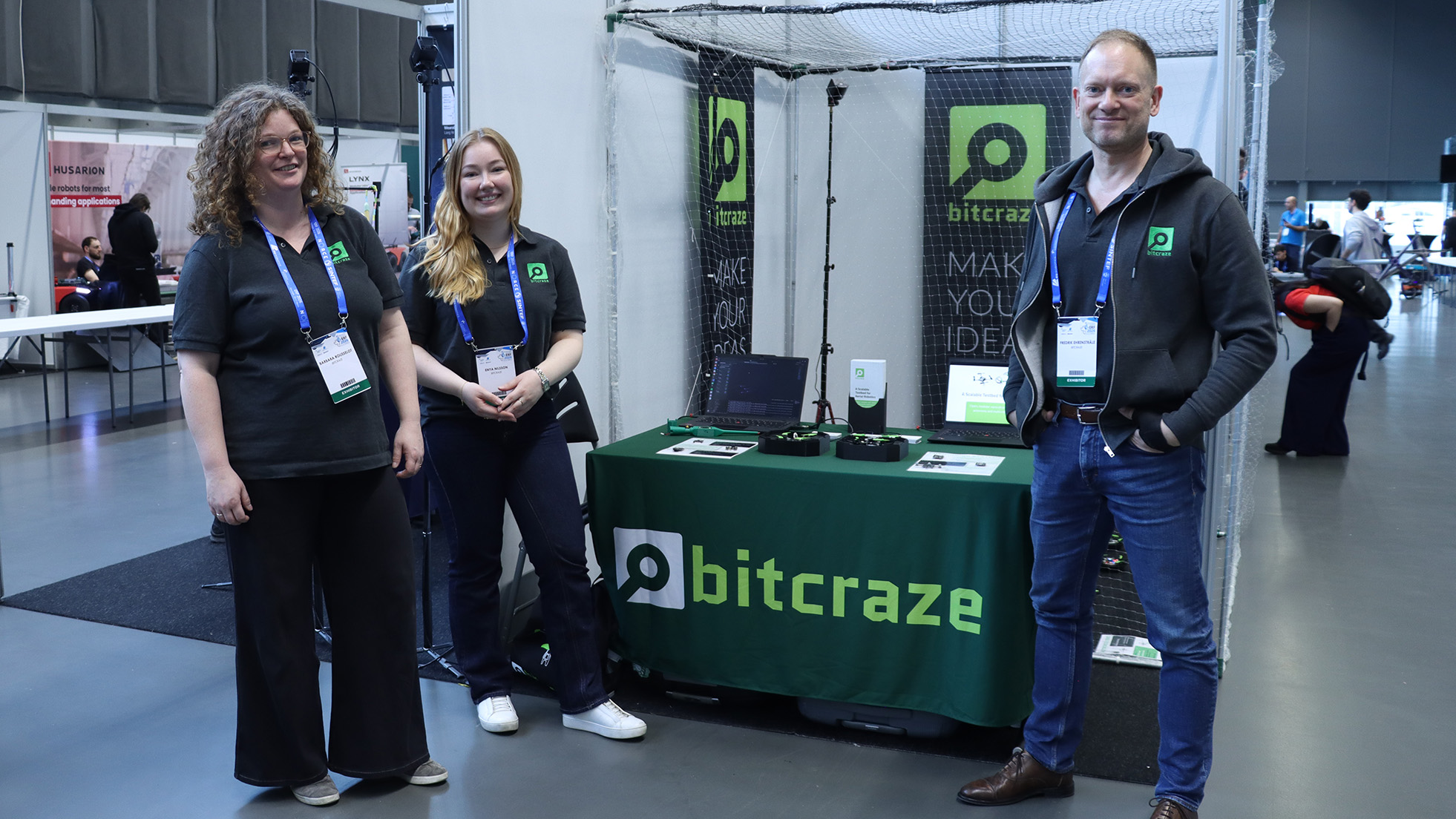
If you are working with the Crazyflie, evaluating platforms, or exploring new research directions, stop by booth 91. You can also reach out at contact@bitcraze.io to schedule time.

Booth #90 is running. Here’s what we’re showing and why we think it’s relevant to the conversations happening at the European Robotics Forum this week.

A Decentralized Brushless Swarm

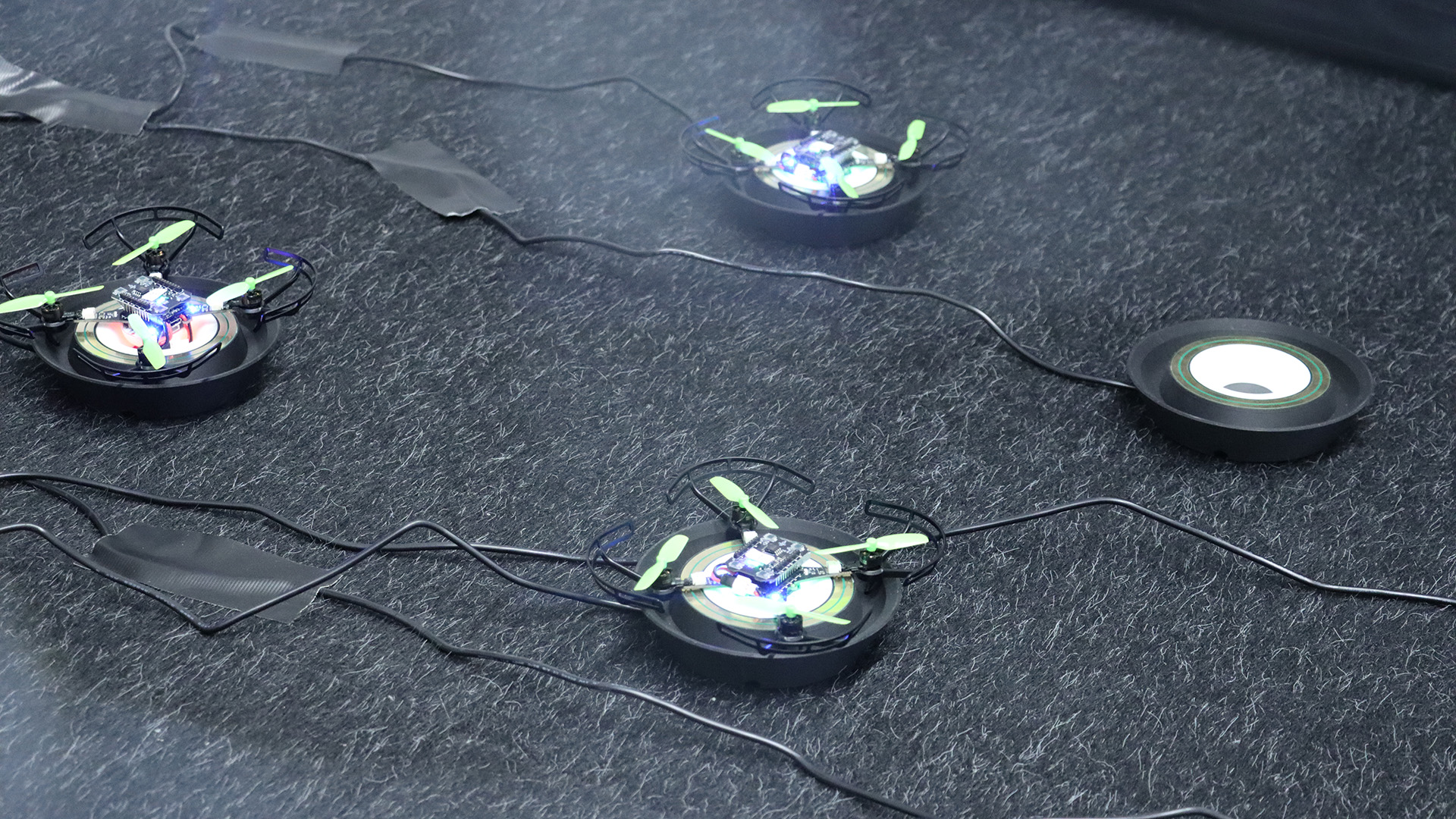
The centerpiece is an evolution of the Decentralized Brushless Swarm demo we published last year. Multiple Crazyflie 2.1 Brushless drones share a volume with no central trajectory planner. Each agent handles its own state estimation, neighbor awareness, and collision avoidance independently. The swarm is fault-tolerant by design: individual failures don’t cascade.

What makes this relevant as a testbed is not the flight itself, but what it lets you study. Decentralized coordination, emergent behavior, and the gap between simulated and physical multi-agent dynamics are all things you can actually probe here, at a scale and cost that makes iteration realistic.

The Swarming Interface

We’re showing a new interface for the first time at ERF. It surfaces per-agent state in real time: position, velocity, battery, role, giving you visibility into what the swarm is doing and why, not just the flight envelope. We’ll write up the technical details separately, but if you want to see it running, the booth is the right place.

A Touch of Magic!

We have built a magic wand. It is a Lighthouse-based device that lets you grab a drone, or a group of them, and steer with your hand. It started as a side project and ended up being a surprisingly good way to demonstrate how the positioning system responds to real-time input. Worth a look if you’re nearby.

Come Find Us

We’re at booth #90 through Thursday March 27. The conversations we’re most interested in are about research infrastructure: how teams design testbeds, what the handoff from simulation to hardware looks like in practice, and where small-scale indoor platforms fit into larger development pipelines.

If you’d like to set aside time for a more focused discussion, reach out at contact@bitcraze.io or the https://www.b2match.com/e/erf2026/meetings app.

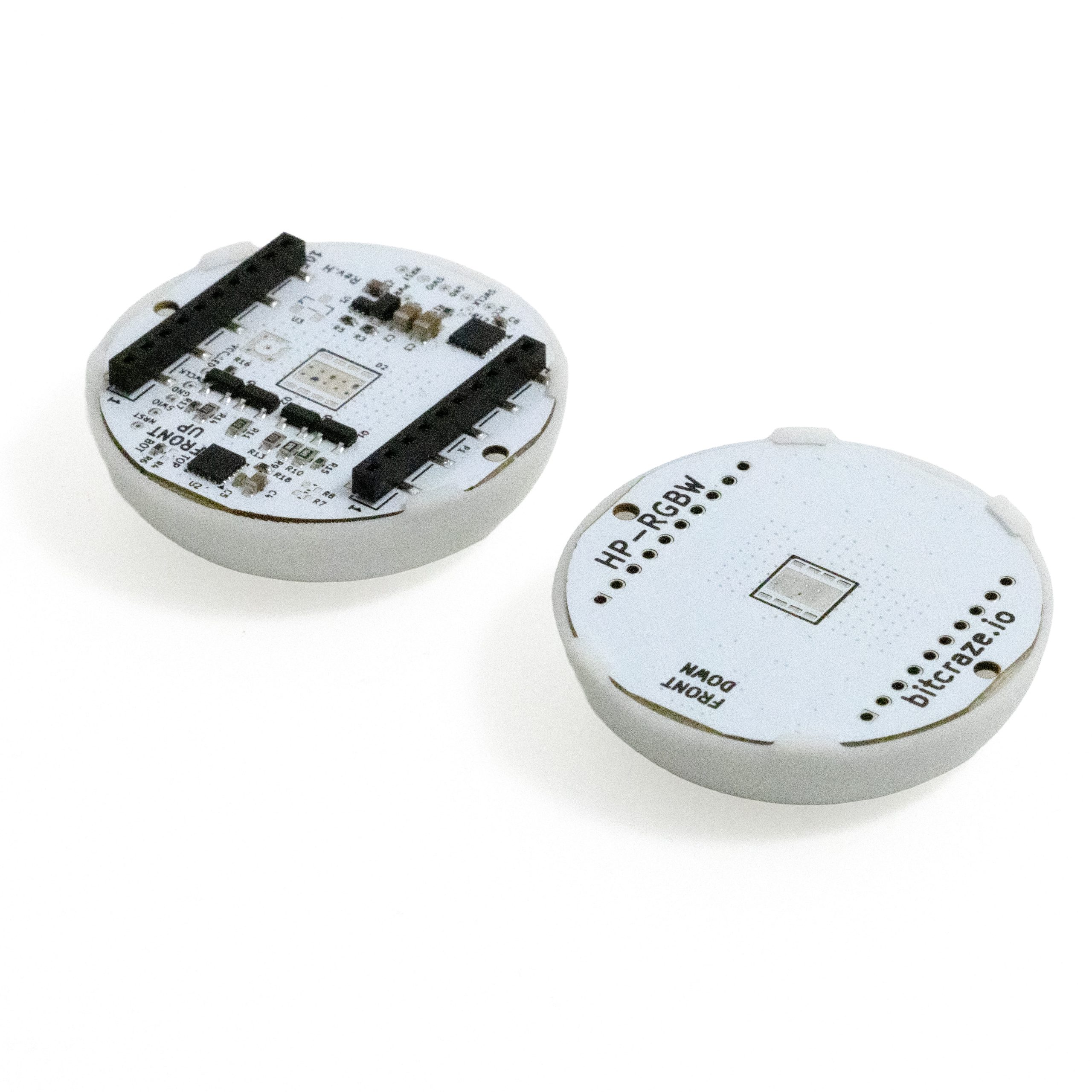
The CrazyflieTM Color LED deck is a high-powered, fully programmable RGB(W) lighting expansion for the Crazyflie 2.x platform —and it’s now available in the shop.

It delivers bright, diffused, and uniform light suitable for research, teaching, vision experiments, and indoor drone choreography. The deck mounts on top or bottom of the Crazyflie and integrates seamlessly through our open-source firmware and I²C-based deck interface.

Two Versions, Same Electronics

The Color LED deck is available in two distinct versions, each sold as a separate product.

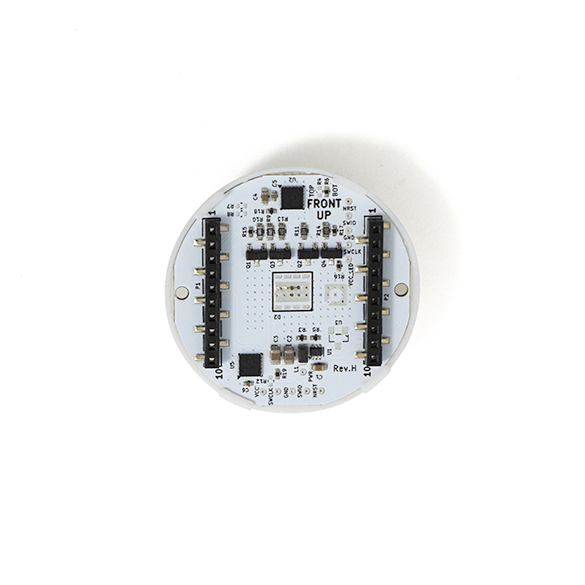
Top-Mounted Color LED Deck

Designed to be placed on top of the Crazyflie. Ideal for scenarios where the drone is viewed from above or when customers need to use positioning or sensor decks underneath the Crazyflie—such as the Flow Deck or other bottom-mounted modules.

  • Works well with motion capture (MoCap) systems using ceiling-mounted cameras.
  • Not recommended with the Lighthouse positioning deck, due to optical occlusion and interference with the lighthouse sensors.

You can find the top-mounted version in the store here

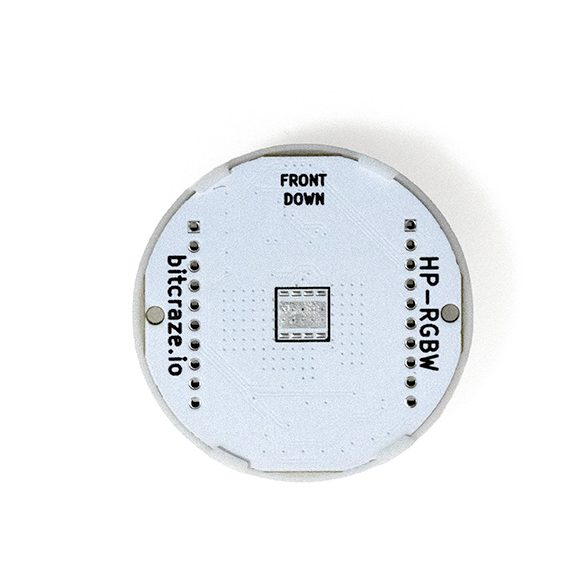
Bottom-Mounted Color LED Deck

This version is suitable for almost all use cases, offering maximum visibility from below and minimal interference with other decks.

  • Ideal for Lighthouse positioning (no optical obstruction).
  • Ideal for MoCap positioning, especially when cameras view from multiple angles

You can find the bottom-mounted version in the store here.

Dual Mounting for Maximum Visibility

Additionally, two Color LED decks can be mounted both above and underneath the Crazyflie simultaneously, creating a strong, uniform light signature visible from all directions. This is best for MoCap environments where multi-angle visibility improves marker/camera performance.

You can see all three variants of the Color LED in action in our latest Christmas video, created in collaboration with Learning Systems and Robotics Lab :

Each color LED deck variant operates independently, allowing the top and bottom decks to be configured with different colors if desired. While all variants share the same electronics, diffuser, and firmware behavior, their physical mounting positions let you choose the setup that best fits your lab, show environment, or positioning needs.

Diffuser now available

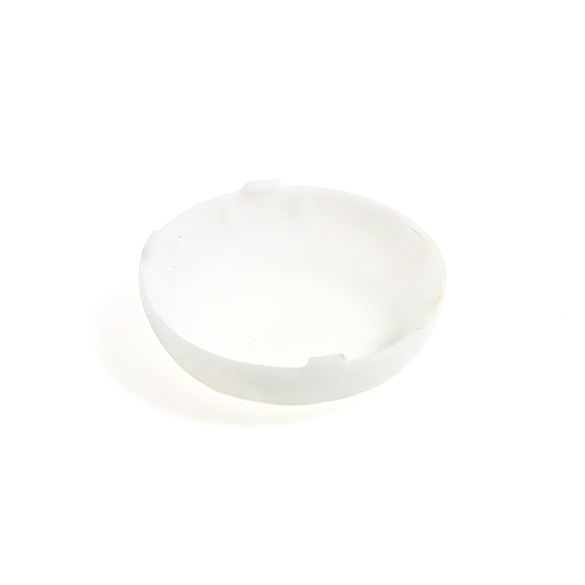
While designing the Color LED deck, we also created a light diffuser—now available in the shop to buy as a standalone product. It is designed to be compatible with the LED ring to spread and soften the light, extending visibility and improving appearance.

You can find the light diffuser in the store here.

The Color LED deck is available now in both versions. Head to the store to order, or contact us for a quote!

FOSDEM is one of the largest open source conferences in Europe, happening every year in Brussels. It’s a special place where developers, researchers, and enthusiasts come together to share ideas, showcase projects, and explore the latest in open-source technology. Over the years, we at Bitcraze have been regular attendees, enjoying the chance to meet fellow open-source fans and see what’s happening across the community.

Last year, we decided to take a bigger step and helped organize a developer room. Devrooms are like mini-conferences: they are handled by a committee that produces a call for participation and handles the schedule for the room. FOSDEM allocates a time slot, a physical room, and video recording for the devroom so that all talks are broadcasted in real-time and recorded. Before, the conference lacked a dedicated devroom for robotics, which is a shame as a lot of robotics, at least in research, are open source, thanks in large part to ROS. That’s why we’re devoted on helping out organizing a devroom focused on robotics and simulation. Being part of the developer room gives us the chance not only to attend talks but also to contribute to the schedule, help coordinate speakers, and support discussions among attendees.

The developer room is packed with exciting content for anyone interested in robotics, swarming, simulation, and more. There are presentations on new tools and libraries, discussions about open-source projects pushing the boundaries of what small robots can do. Last year, talks ranged from advanced motion planning and multi-robot coordination to hands-on experiments with drones and embedded systems. For 2026, the schedule promises even more fascinating sessions, highlighting the latest developments in robotics software and hardware, and providing a space to exchange ideas with people working on similar challenges.

Whether you’re interested in ROS, sensor fusion, or just curious about what researchers and makers are building, the developer room is a great place to meet like-minded people and get inspired. We’ve found it to be an incredible platform for sharing knowledge, discovering new tools, and seeing how open-source contributions can accelerate innovation.

This is happening on Saturday 31st of January, from 10.30 to 18.30, in room UB2.147. You can check out the full FOSDEM 2026 Robotics and Simulation schedule here: FOSDEM 2026 schedule

We’re really looking forward to being part of the developer room again this year, and we hope to see some of you there. If you’ll be at FOSDEM, come by, say hi, and share what you’ve been working on — we can’t wait to see the amazing projects the community will bring this year!

With 2025 coming to a close and only a few days left on the calendar, it’s time to turn our attention forward and take a look at what we have planned for 2026. As usual, the year ahead is shaping up to be a busy one, with several long-running projects finally moving closer to release.

Projects

Our first major release of the year will be the Color LED deck, currently planned for the end of January. You can sign up here to receive an email when it’s available! This has been a long-awaited addition, and getting it out the door will allow us to fully shift focus to two larger projects that have been steadily progressing throughout 2025: Lighthouse v2 and the camera deck.

The upcoming Lighthouse v2 deck is designed to support Lighthouse systems with up to 16 base stations, significantly increasing the size of the spaces that can be covered. We made solid progress on this during 2025, both in hardware and software, and 2026 will be about pushing this work further toward a more complete and robust solution.

The camera deck is another project that has been quietly advancing behind the scenes. Several prototypes have already flown successfully, and with more dedicated time now available, we’re aiming to make meaningful progress on this front during 2026 as well. While there’s still work to be done, things are moving in the right direction.

Beyond these headline projects, we also expect to continue improving the Crazyradio 2, building on the updates from 2025 and further strengthening its performance, especially for swarm use cases.

Conferences

As is now tradition, the year will kick off with FOSDEM, where we’ll once again be present — more details on that coming soon. In late March, you’ll also find us at ERF, followed by ICRA in Vienna in early June. Conferences are always a great opportunity to meet the community, see what others are working on, and share what we’ve been building.

We’ll be sharing more information about these events — and possibly a few others — as the year unfolds, so keep an eye on the blog for updates.

Team

After a big growth spurt in 2025, the team is in a good place, but we’re not quite done yet. We still have one open position for a production QA & Embedded Engineer, and we’re looking forward to welcoming the right person to join us.

2026 is shaping up to be an exciting year, and we’re looking forward to sharing more as things develop. With that, we’d like to wish all our users, contributors, and readers a great start to 2026. We hope it will be a year full of successful experiments, smooth flights, and maybe even a few unexpected discoveries. See you in the new year!

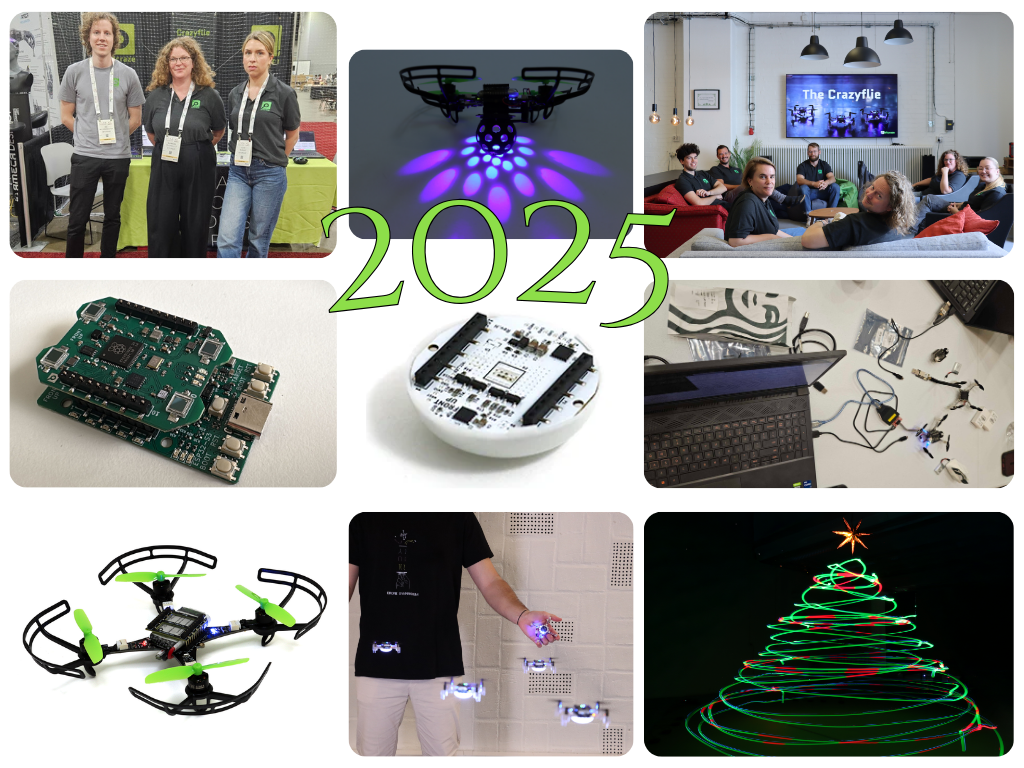
Time flies! 2025 is already drawing to a close, and as has become a Bitcraze tradition, it’s time to pause for a moment and look back at what we’ve been up to during the year. As usual, it’s been a mix of new hardware, major software improvements, community adventures, and some changes within the team itself.

Hardware

2025 started with a bang, with the release of the Brushless! It was a big milestone for us, and it’s been incredibly exciting to see how quickly the community picked it up and started pushing it in all sorts of creative directions. From more demanding research setups to experimental control approaches, the Brushless has already proven to be a powerful new addition to the ecosystem. Alongside the Brushless, we also released a charging dock enabling the drone to charge autonomously between flights. This opened the door to longer-running experiments and led to the launch of our Infinite Flight bundle, making it easier than ever to explore continuous operation and autonomous behaviors.

Beyond new products, we spent much of the year working on two major hardware-related projects. During the first part of the year, our focus was on expanding the Lighthouse system to support up to 16 basestations. The second part of the year much of our efforts shifted toward preparing the release of the Color LED, which we’re very much looking forward to seeing in the wild.

Fun Fridays also got some extra time in the spotlight this year. Aris produced a series of truly delightful projects that reminded us all why we love experimenting with flying robots in the first place. Have you seen the disco drone, or the claw?

Software

On the software side, 2025 brought some important structural improvements. The biggest change was the introduction of a new control deck architecture; which lays the groundwork for better identification and enumeration of decks going forward. This is one of those changes that may not look flashy on the surface, but it will make life easier for both users and developers in the long run.

We also made steady progress with the Rust Lib, moving from Fun Friday to a fully-fleshed tool. It is now an integrated and supported part of our tooling, opening up new possibilities for users who want strong guarantees around safety and performance.

Another long-awaited update this year was an upgrade to the Crazyradio, improving its ability to handle large swarms of Crazyflie™ drones. This directly benefits anyone working with multi-drone setups and helps make swarm experiments more robust and scalable.

Community

It’s fair to say that 2025 was a busy year on the community and events front. We kicked things off, as usual, at FOSDEM, where we hosted a dev room for the first time! A big step for us and a great opportunity to connect with fellow open-source developers.

Later in the year, we made our first trip back to the US since the pandemic. This included sponsoring the ICUAS competition, and hosting a booth at ICRA Atlanta, both of which were fantastic opportunities to meet researchers and practitioners working with aerial robotics. We also presented a brand-new demo at HRI.

In September, KTH hosted a “Drone gymnasium“, giving students hands-on access to Crazyflies and encouraging them to explore new robotic experiences. Seeing what happens when students are given open tools and creative freedom is always inspiring, and this event was no exception.

2025 was also marked by continued and valuable community contributions. From improvements and bug fixes to features like battery compensation, these contributions play a huge role in shaping the platform and pushing it forward.

Team

Behind the scenes, Bitcraze itself continued to grow. This year brought both change and expansion within the team. Tove moved on to new adventures in Stockholm, and while we’ll miss her, we were also happy to welcome a record four new team members!

Aris ansitioned from intern to full-time developer, Fredrik then joined as a growth and partnership guru, followed by Enya as an application engineer. Hampus was the last to join us as an administrator. With these new faces, the team is larger — and stronger — than ever.

All in all, 2025 has once again been an exciting, intense, and rewarding year for Bitcraze. Thank you to everyone in the community who flew with us, built on our tools, reported issues, shared ideas, and showed us what’s possible with tiny flying robots. We can’t wait to see what 2026 brings.

Since the end of 2024, we’ve been putting effort into spreading out our manufacturing. With international trade rules rapidly changing, it felt like the right moment to expand our production footprint. Doing this helps us keep stock more stable, react faster to demand, and makes life easier for you when it comes to potential import-related costs.

To make it happen, we’ve been working closely with our long-time partner in China, Seeed Studio. They’ve been helping us move the production of some of our items to Vietnam, where exciting new opportunities have opened up. This way, we can keep the same quality and reliability you’re used to while spreading out production across more locations, which makes our supply chain stronger.

Right now, four of our products are being made in Vietnam: the Crazyflie 2.1+, the Crazyflie 2.1 Brushless, the Flow Deck, and the Crazyradio 2.0. Meanwhile, the Charging Dock is made here in Sweden, and the Lighthouse Base Station comes from Taiwan. That means our production is now spread over four different locations!

We still produce in China as well—that’s where our newest deck will come from, for example. The plan is to gradually add more products made in Vietnam, spreading production across locations, reduce risk, and keep things running smoothly for both us and you. Over time, this will make it easier to maintain stock, respond quickly to demand, and give you a smoother experience no matter where you are in the world.

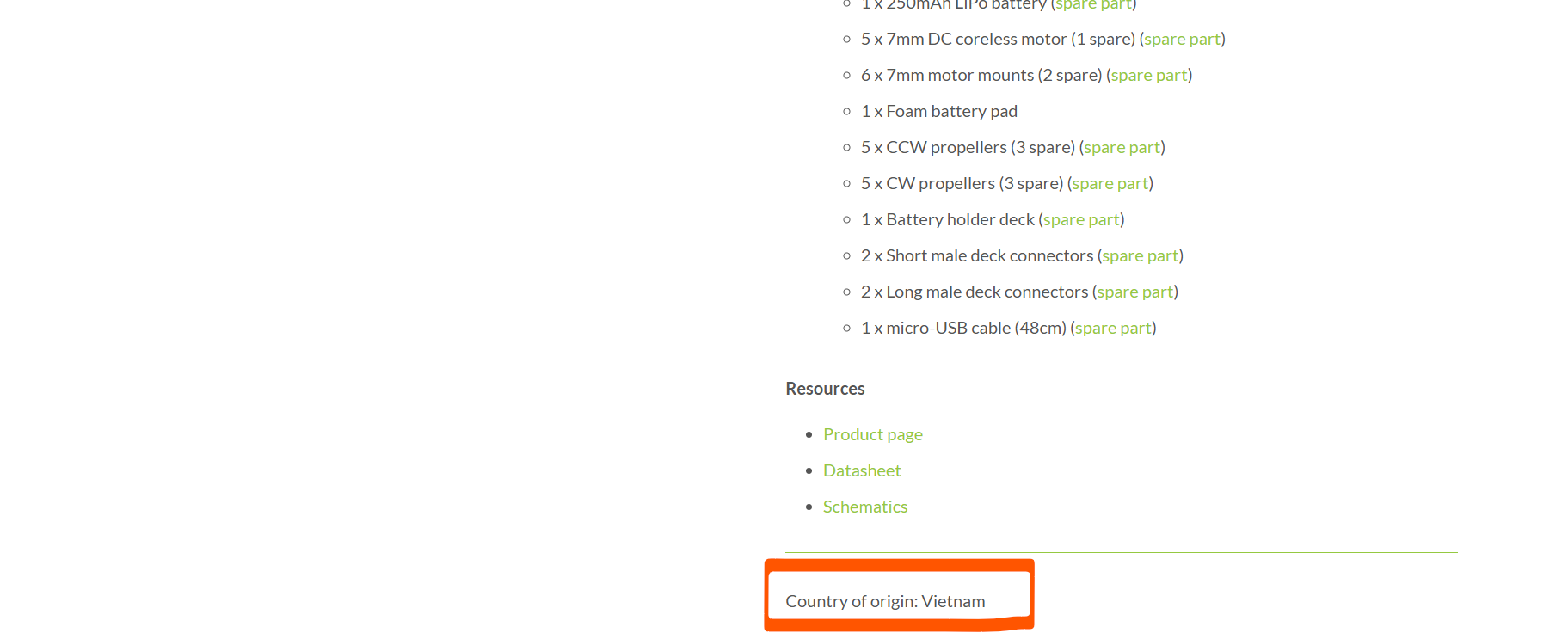
We also want to make it visible where your products come from when you shop with us. In May, we updated the store to clearly display the country of origin for each item. You can now find this information at the bottom of every product page, so you always know where the item in your cart is being made. For many of you, this small detail helps plan ahead and makes it easier to estimate any extra costs from international shipping.

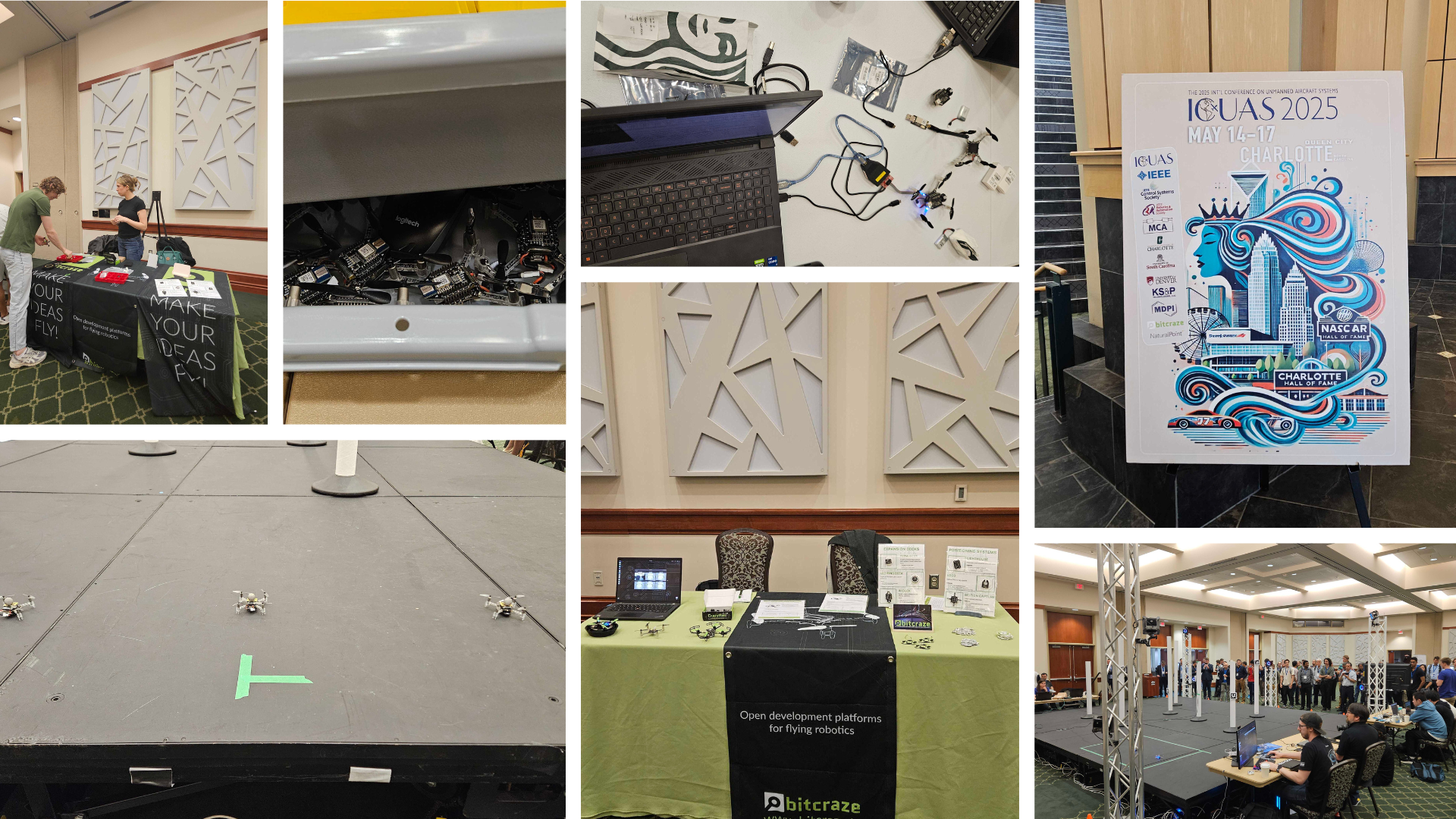
As we mentioned in a previous blog post, the last couple of weeks have been full of exciting events in the US. We first began our adventure in Charlotte, North Carolina, where we attended the International Conference on Unmanned Aircraft Systems (ICUAS), as platinum sponsors.

We were especially thrilled to be involved because the final stage of the conference’s competition featured Crazyflies, which played a central role in the challenge.

The ICUAS UAV Competition

This year’s competition simulated a search mission in an urban environment. The goal was for teams to identify ArUco markers placed on multiple obstacles, while maintaining line-of-sight and communication among a swarm of three Crazyflies.

Each team’s UAVs launched from a designated base, navigated a known environment, and attempted to locate several targets. The drones relied on an OptiTrack system for positioning and used the AI deck as a camera for image recognition. Constant communication between the base and all UAVs was required throughout the mission.

The event, organized by the LARICS team, combined both simulation and real-world implementation. Their hard work ensured that competitors could smoothly transition their systems from digital models to actual flying drones. What followed was an intense and fun two-day hackathon.

Although the ICUAS UAV Competition drew interest from 26 teams globally, only five finalist teams made it to Charlotte to run their scenarios with real drones. In the end, it was Team Aerial Robotics from the Indian Institute of Technology Kanpur (IITK) who took home first place—congratulations to them!

While the event went smoothly overall, some communication challenges cropped up—solved creatively by placing a radio in the center of the arena. Battery management was also key, with fully charged packs being a hot commodity to maximize flight time.

Research and Presentations

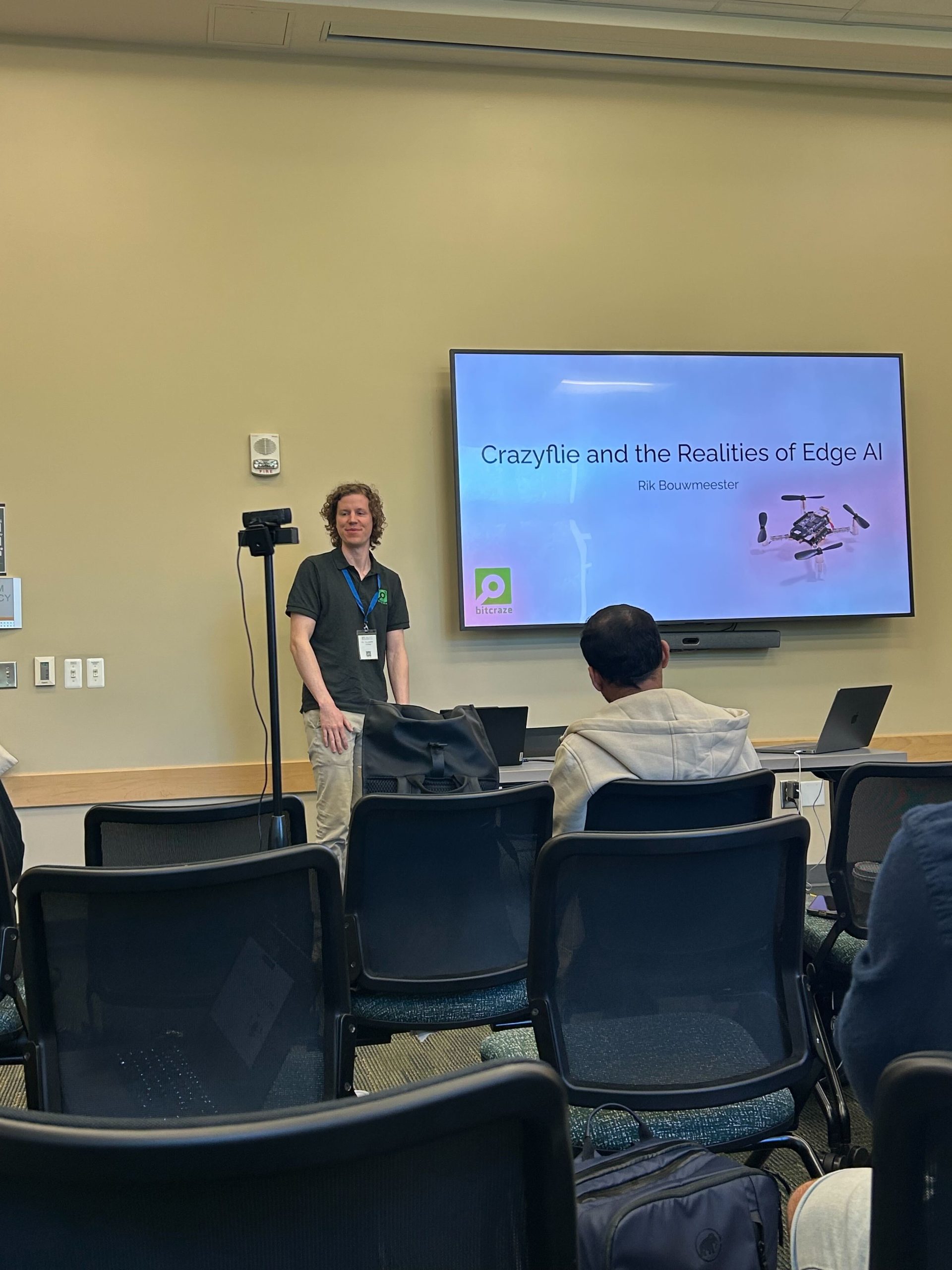
Alongside the competition, the conference featured a wide range of research presentations. We were proud to see Rik present on the AI deck during a workshop focused on embodied AI.

One of the highlights was the Best Paper Award, which—although we missed the talk, was awarded to a team from Queen’s university using the Crazyflie to simulate drone landings on ocean waves. You can read their fascinating paper here:
https://arxiv.org/abs/2410.21674

Final Thoughts

Overall, ICUAS 2025 was a great experience—full of innovation, collaboration, and of course, plenty of flight time. We’re grateful to the organizers, competitors, and everyone who stopped by our booth. Until next time!

We’ve got an exciting month ahead – in just a few weeks, we’re heading off to not one, but two amazing conferences! It’s going to be a whirlwind, but we couldn’t be more thrilled to be part of these events, meet fellow robotics enthusiasts, and show off some cool demos. Here’s where you’ll find us:

First stop: ICUAS

We’re kicking things off with ICUAS (International Conference on Unmanned Aircraft Systems), where we’re proud to be official sponsors of the competition. We’ll be present there to help and support the constestants of the competition, that are going to use the Crazyflies in simulation and in real life. The teams will need to deploy a team of UAVs in an urban environment to locate and identify threats.

It’s our first time attending ICUAS, so this is a brand new adventure for us – and we can’t wait to dive in and see what it’s all about!

Next up: ICRA

Just two days after ICUAS wraps up, we’re heading straight to ICRA – this year taking place in Atlanta. You’ll be able to find us at booth 131, right in front of the Tech Talk stage. If you’re attending, definitely come say hi!

We had the honour to be invited to be part of the workshop “25 years of arial robotics: challenges and opportunities“. Rik will talk there on the 23th of May at 16.10; covering Bitcraze’s history and the challenges we’ve faced in positioning a nanocopter – all in just 10 minutes. We’ll also take part in the forum on Undergraduate Robotics Education Programs on the 22th of May. We’ll have a poster presenting the Crazyflie as an educational platform.

These are all fantastic opportunities to highlight what makes our platform special and to exchange ideas with you! If you’ve got a paper or publication featured at ICRA, we’d love to hear about it – email us at contact@bitcraze.io, leave a comment below this post, or drop by our booth.

Demo

We’re bringing back our trusted demo setup – but this time, with more Brushless units and charging docks! It will be a version between what we presented at the last ICRA and what we call “the fish tank demo” we have now at the office.

We’ll also be bringing along some prototypes and new decks we’re currently working on – so if you’re curious about what’s coming next for Crazyflie, this is your chance to get a sneak peek and chat with us about it!

Give us your posters!

Last year, we collected posters from proud participants to decorate the office, and it turned out amazing – so we’re doing it again! If you’ve got a cool poster featuring our products and aren’t sure what to do with it after your presentation, come by our booth. We’d love to swap it for something a little extra special.

All in all, it’s shaping up to be a busy, exciting, and (hopefully) couple of weeks. Whether you’re at ICUAS or ICRA, stop by, chat with us, and see the Crazyflies in action. We’re looking forward to reconnecting with old friends and meeting new ones – see you there!

This week in Germany

This week, some of us are on an adventure!
Marcus and Tobias will be exploring both the RIG and Embedded World fairs.

RIG showcases the latest innovations in robotics and intelligent systems, while Embedded World is the place to be for cutting-edge embedded technologies. Both events promise amazing demos, insightful talks, and a chance to catch up with some of our collaborators.

Planning to attend either fair? Let’s meet up! We’d love to explore the exhibitions together, chat about cool technologies, or just geek out about the innovations on display. We’ll be wandering through Embedded World on Thursday and hitting RIG on Friday. Send us an email if you’d like to connect – we’re always up for grabbing coffee!

Next May in Atlanta

After our adventures as visitors, we’re thrilled to announce that we’ll be exhibiting at the International Conference on Robotics and Automation (ICRA) 2025! Stop by our booth where we’ll be showcasing our latest demo. We’ll be, as always, available to discuss our newest products, answer your technical questions, and provide insights into how our solutions can transform your robotics applications. We’re also eager to hear your thoughts on what you’d like to see in our upcoming products. Mark your calendars and make sure to find us at Booth #131 – we may even have some presentations in the work, but nothing confirmed yet.

Today in the shop

And, last but not least, the Brushless is now available in a Swarm configuration! Both the Lighthouse Swarm bundle and Loco Swarm bundle have been added to our shop. These new bundles feature all the same components as our standard Swarm packages, but come equipped with the Crazyflie 2.1 Brushless instead of the Crazyflie 2.1+ model.