conference

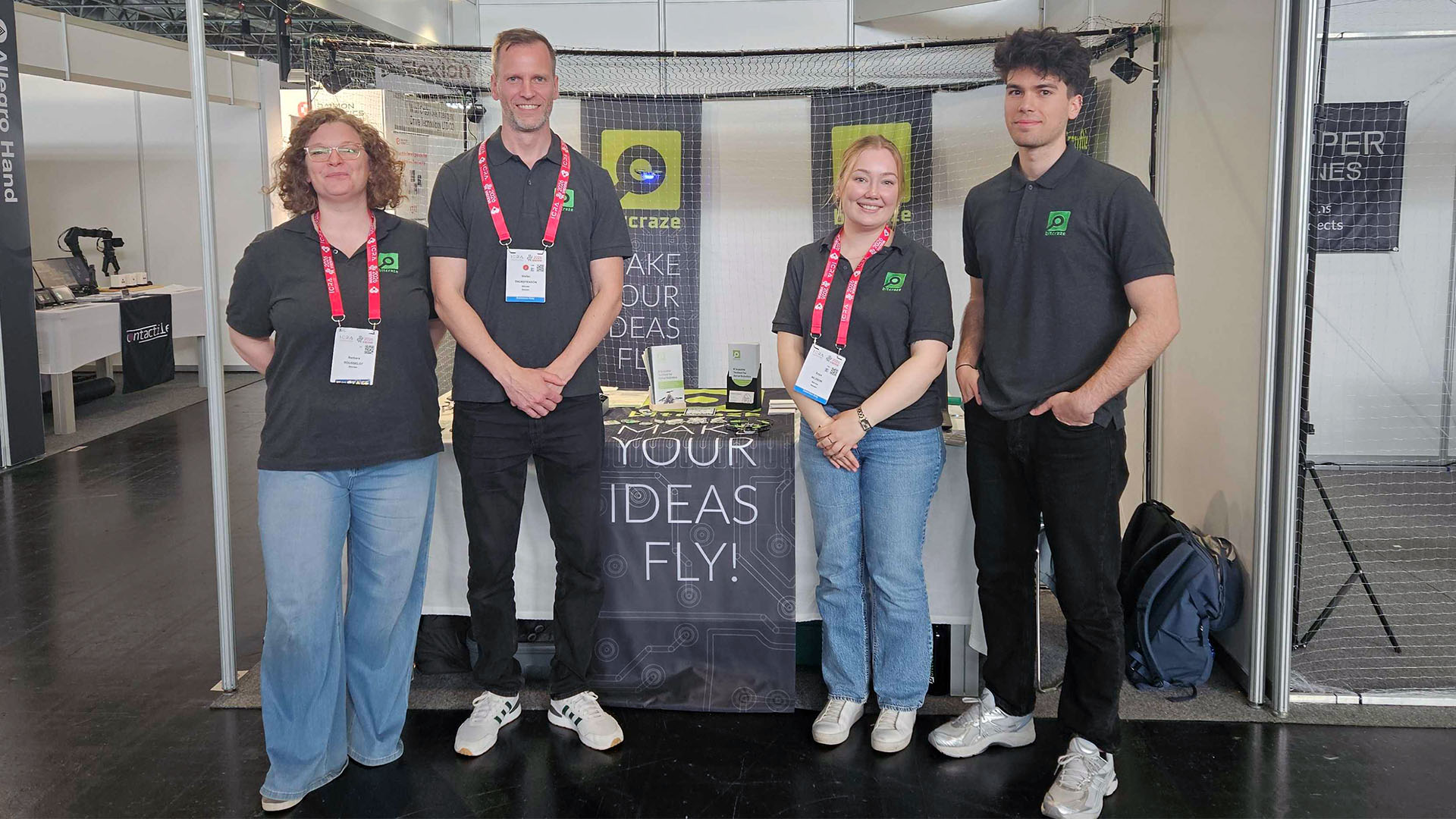
We are at ICRA 2026 in booth 91, and we are looking forward to a few days in Vienna for research discussions, technical conversations, and reconnecting with the community.

ICRA has always been a favorite of ours. It brings together researchers from very different domains, but despite different research goals, many face similar questions around how to build reliable experiments, iterate quickly, and evaluate results in a repeatable way.

Many of the improvements in the Crazyflie ecosystem over the years have started exactly there. Someone stops by the booth, describes a challenge in their lab, and shortly thereafter a feature, library, or hardware addition begins to take shape.

This year we are bringing a few things we are excited to discuss.

Towards larger and easier-to-manage swarms

Over the last months we have spent time improving how larger groups of Crazyflies behave and scale in practice.

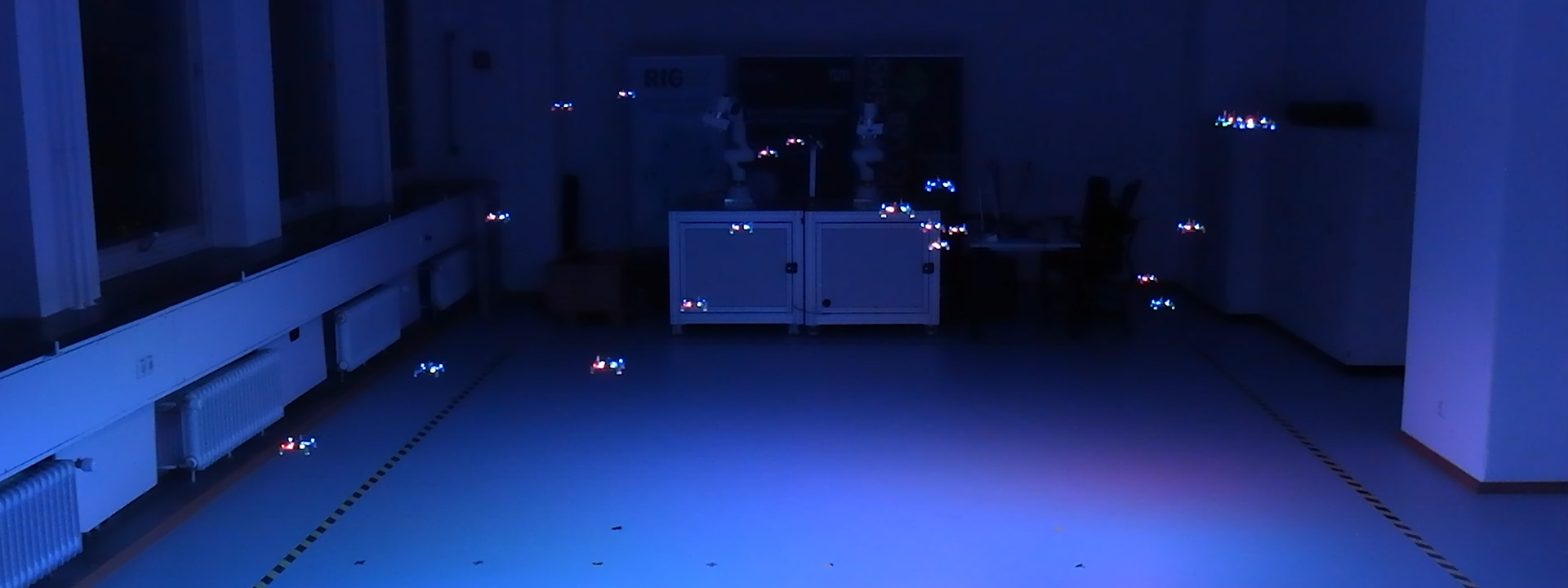
Swarm experiments sometimes start small. Then a few drones become ten, ten become fifty, and suddenly radio communication and system overhead become part of the research problem itself.

Recent work around overall system performance has significantly improved how many Crazyflies can be handled from a single radio, reducing communication bottlenecks and making larger coordinated experiments easier to run. We are also working toward improved tooling and workflows for managing swarms, with the goal of reducing setup complexity and making experiments easier to reproduce. A transition to Rust has helped reduce connection overhead and improve responsiveness in larger systems.

We are looking forward to discussing where this work is heading and hearing what challenges researchers encounter in their own systems.

Tech talk: “A Swarm Welcome to New Aerial Robotics Functionality”

Wednesday, June 3rd, 12:45 CEST, at the Tech Talk Stage in Hall C7

We will give a tech talk focused on recent work around swarm functionality and capabilities.

The session will cover improvements that significantly expand what can be done with larger Crazyflie groups and how recent developments are reducing practical limitations in swarm experimentation.

If your work involves multi-agent systems, collective behaviors, or coordinated aerial robotics, stop by and continue the discussion afterward.

Demonstration: SwarmGPT and human interaction with robot swarms

On Wednesday afternoon, together with the Learning Systems and Robotics Lab (LSY) at the Technical University of Munich, we will demonstrate SwarmGPT running on the Crazyflie.

Some of you may remember the end-of-year collaboration a few months ago. This time we are bringing a more interactive version of the concept. SwarmGPT explores how natural-language intent can be translated into coordinated swarm behaviors. Rather than manually programming trajectories, users can pick a piece of music and prompt desired expression, and leave planning and safety mechanisms to the system to execute on.

Come by our booth and try it for yourselves.

Color, Rust, camera deck, and more

We will also bring several smaller developments and ongoing efforts that we have discussed on the blog over recent months.

Some of these include:

  • Continued work on Rust 
  • Improved radio performance for larger groups of drones
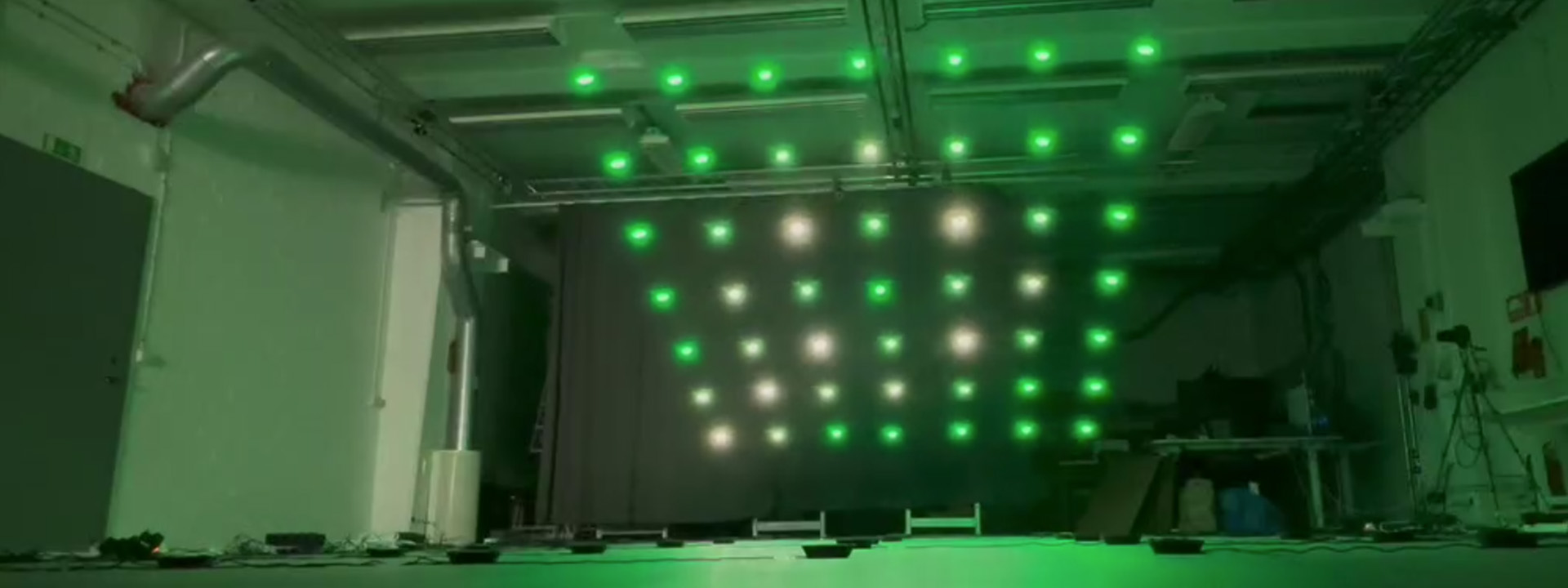
  • The now available Color LED Deck
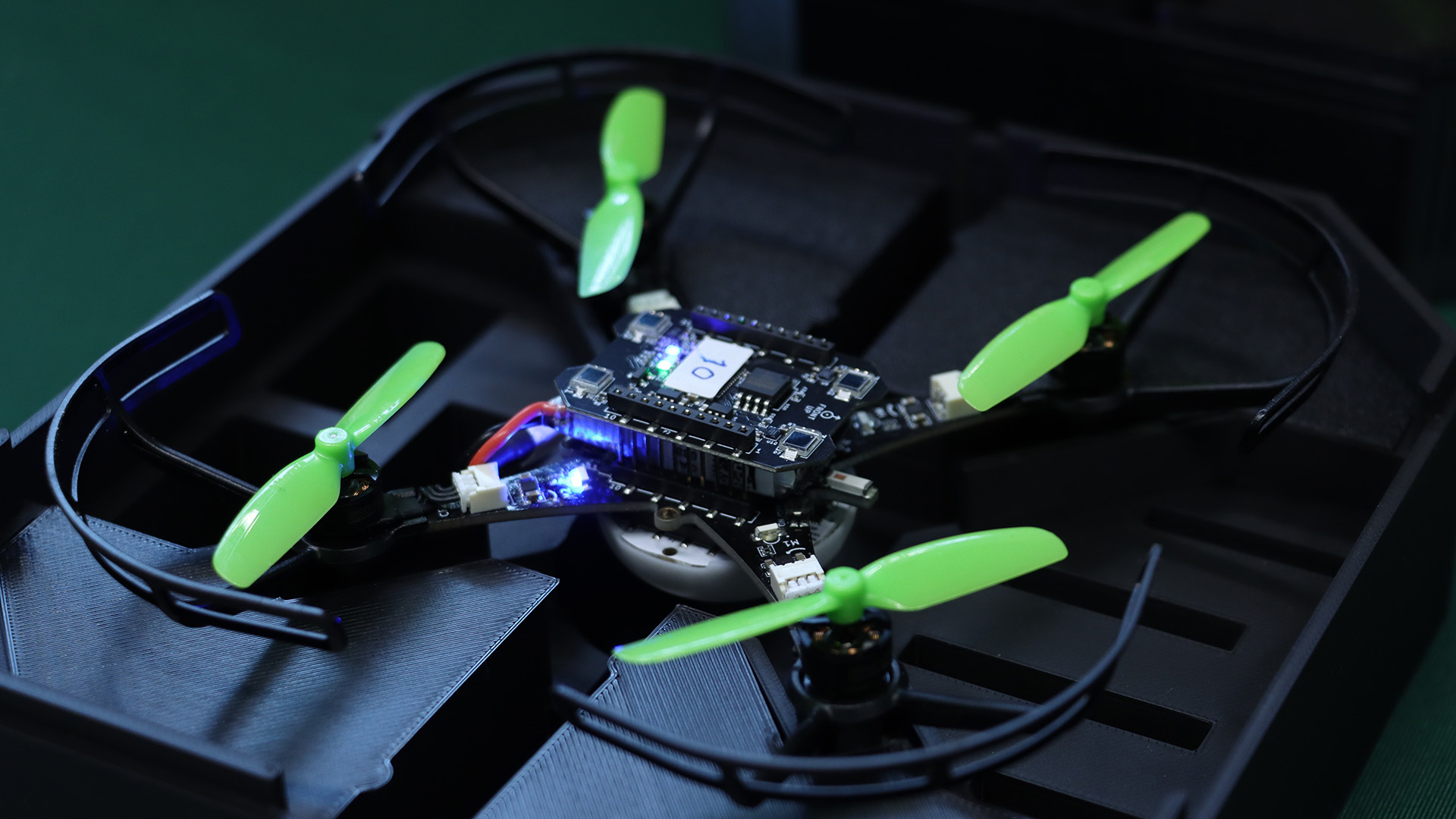
  • Early version of the upcoming camera deck
  • Discussions around improved swarm workflows and management support

The Color LED deck has turned out to be useful far beyond aesthetics. In swarm experiments, visible state information can help indicate timing, grouping, synchronization, and system behavior across multiple agents.

User survey

We will be running a community survey during ICRA. One of the strengths of the Crazyflie ecosystem is the breadth of research and experimentation happening around it. People use the platform in ways we never originally anticipated, often combining different hardware, software, and workflows depending on the research problem they are trying to solve.

The survey is an opportunity for us to better understand how the platform is being used today, and the feedback helps us make better decisions around priorities, tooling, documentation, hardware, and long-term roadmap direction.

We would greatly appreciate a few minutes of your time. Please complete the survey following this link.

Trade your poster with us

This has become a tradition. If you are presenting research involving Crazyflie and do not need your poster after your session, bring it by the booth.

We love collecting them and filling our office walls with the incredible range of work built on the platform. It is also one of our favorite ways of seeing where the community takes the Crazyflie next.

Bring your poster, and we will make sure you leave with a little Bitcraze treat in return.

Find us in booth 91

If you are working with Crazyflie already, considering it for your research, or simply want to discuss ideas around swarm robotics, autonomous flight, perception, AI, or experimental workflows, stop by booth 91.

We are looking forward to the conversations.

It’s that time of year again! ICRA 2026 (IEEE International Conference on Robotics & Automation) is just around the corner, and this year we’re heading to Vienna. We couldn’t be more excited about this one: Vienna is an incredible city, and we’ve been working on some things we can’t wait to share.

June 1–5, 2026. Come find us!

A reproducible testbed for aerial robotics research

We will be running a live autonomous flight system based on the Crazyflie platform.

The focus is not the flight itself, but what it enables. The system provides a controlled indoor environment where experiments can be repeated, variables isolated, and results compared over time.

This is aligned with how aerial robotics research is actually conducted: iteration speed, reproducibility, and observability matter more than scale in early and mid-stage research. Our platform is designed around those constraints.

Autonomous indoor flight for controlled experimentation

The setup demonstrates autonomous flight under conditions that remain stable across runs.

This allows researchers to evaluate control strategies, perception pipelines, and multi-robot coordination without environmental noise dominating results. It also reduces costs and operational overhead compared to larger platforms, which changes how frequently experiments can be run.

In practice, this makes it feasible to move from idea to validated result faster and with clearer insight into failure modes.

Used in swarm robotics, control, and physical AI research

The Crazyflie platform is used across domains such as swarm robotics, learning-based control, SLAM, and human–robot interaction.

It has been referenced in hundreds of peer-reviewed publications and is often used as a bridge between simulation and larger systems. The value is not in representing the final deployment environment, but in enabling rigorous, comparable experimentation at low cost and risk.

If you are working in these areas, we are interested in how your setup is structured and where constraints appear.

Share your work with us

If you are presenting work that involves the Crazyflie, we would like to see it.

Even better, if you do not need your poster after your session, bring it by the booth! We collect and display these as part of the broader body of work built on the platform. We will make sure it is appreciated properly.

Meet us at ICRA 2026

One of our favourite things about ICRA is getting to meet the community in person, hearing about your research, seeing what you’ve built with the Crazyflie, and exchanging ideas with people who are just as excited about small flying robots as we are. Whether you want to chat about your research, see the demo up close, or just catch up, our booth is the place to be. We love hearing about all the cool projects you’re working on with the Crazyflie, so don’t be shy!

If you are working with the Crazyflie, evaluating platforms, or exploring new research directions, stop by booth 91. You can also reach out at contact@bitcraze.io to schedule time.

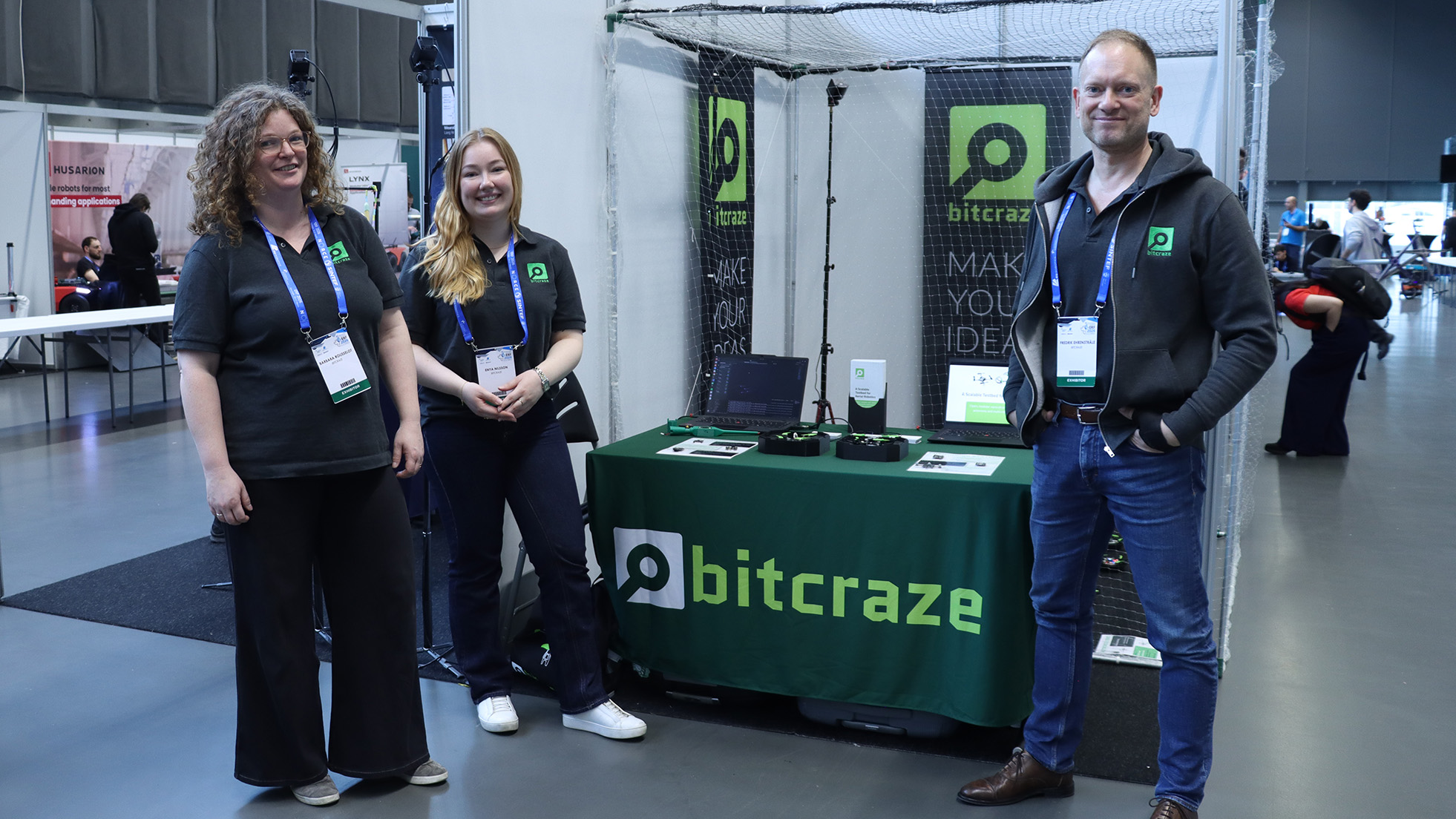
Booth #90 is running. Here’s what we’re showing and why we think it’s relevant to the conversations happening at the European Robotics Forum this week.

A Decentralized Brushless Swarm

The centerpiece is an evolution of the Decentralized Brushless Swarm demo we published last year. Multiple Crazyflie 2.1 Brushless drones share a volume with no central trajectory planner. Each agent handles its own state estimation, neighbor awareness, and collision avoidance independently. The swarm is fault-tolerant by design: individual failures don’t cascade.

What makes this relevant as a testbed is not the flight itself, but what it lets you study. Decentralized coordination, emergent behavior, and the gap between simulated and physical multi-agent dynamics are all things you can actually probe here, at a scale and cost that makes iteration realistic.

The Swarming Interface

We’re showing a new interface for the first time at ERF. It surfaces per-agent state in real time: position, velocity, battery, role, giving you visibility into what the swarm is doing and why, not just the flight envelope. We’ll write up the technical details separately, but if you want to see it running, the booth is the right place.

A Touch of Magic!

We have built a magic wand. It is a Lighthouse-based device that lets you grab a drone, or a group of them, and steer with your hand. It started as a side project and ended up being a surprisingly good way to demonstrate how the positioning system responds to real-time input. Worth a look if you’re nearby.

Come Find Us

We’re at booth #90 through Thursday March 27. The conversations we’re most interested in are about research infrastructure: how teams design testbeds, what the handoff from simulation to hardware looks like in practice, and where small-scale indoor platforms fit into larger development pipelines.

If you’d like to set aside time for a more focused discussion, reach out at contact@bitcraze.io or the https://www.b2match.com/e/erf2026/meetings app.

Bitcraze will exhibit at the European Robotics Forum 2026 March 23-27 in booth #90, where we will demonstrate a live, autonomous indoor flight setup based on the CrazyflieTM platform. The demonstration features multiple nano-drones flying autonomously in a controlled environment and reflects how the platform is used in research and applied robotics development.

Why Indoor Aaerial Testbeds Matter

The purpose of the demonstration is not the flight itself, but the role such setups play in validating aerial robotics concepts. Indoor, small-scale aerial systems allow researchers and R&D teams to study autonomy, perception, control, and multi-robot coordination under safe and repeatable conditions. This makes it possible to explore system behavior, test assumptions, and iterate rapidly before moving to larger platforms or less controlled environments.

Applicable in Both Academia and Industrial R&D

Bitcraze is used both in academic research and in industrial R&D contexts. In academia, the platform supports experimental work in areas such as swarm robotics, learning-based control, and human–robot interaction, and has been referenced in hundreds of peer-reviewed research papers worldwide. In industry, similar setups are increasingly used as testbeds to de-risk development by validating ideas indoors before scaling to outdoor testing, larger drones, or other robotic systems that require higher investment and operational complexity.

Hands-on Discussions at the Booth

At the booth, the live flight cage will be complemented by hands-on access to additional drones, expansion decks, and software tools. This allows for technical discussions around hardware architecture, sensing and positioning options, software stacks, and how different configurations support different research or development goals.

The Conversations We Are at ERF to Have

At ERF, Bitcraze is there to engage in conversations about platforms, testbeds, and how ambitious aerial robotics ideas can be validated in a financially responsible, safe, and controlled manner. This includes discussions with academic groups, industrial R&D teams, and project partners working across the research-to-application spectrum.

Looking forward to the discussions in Stavanger in booth #90!

Send us a message to contact@bitcraze.io to book a meeting at the show!

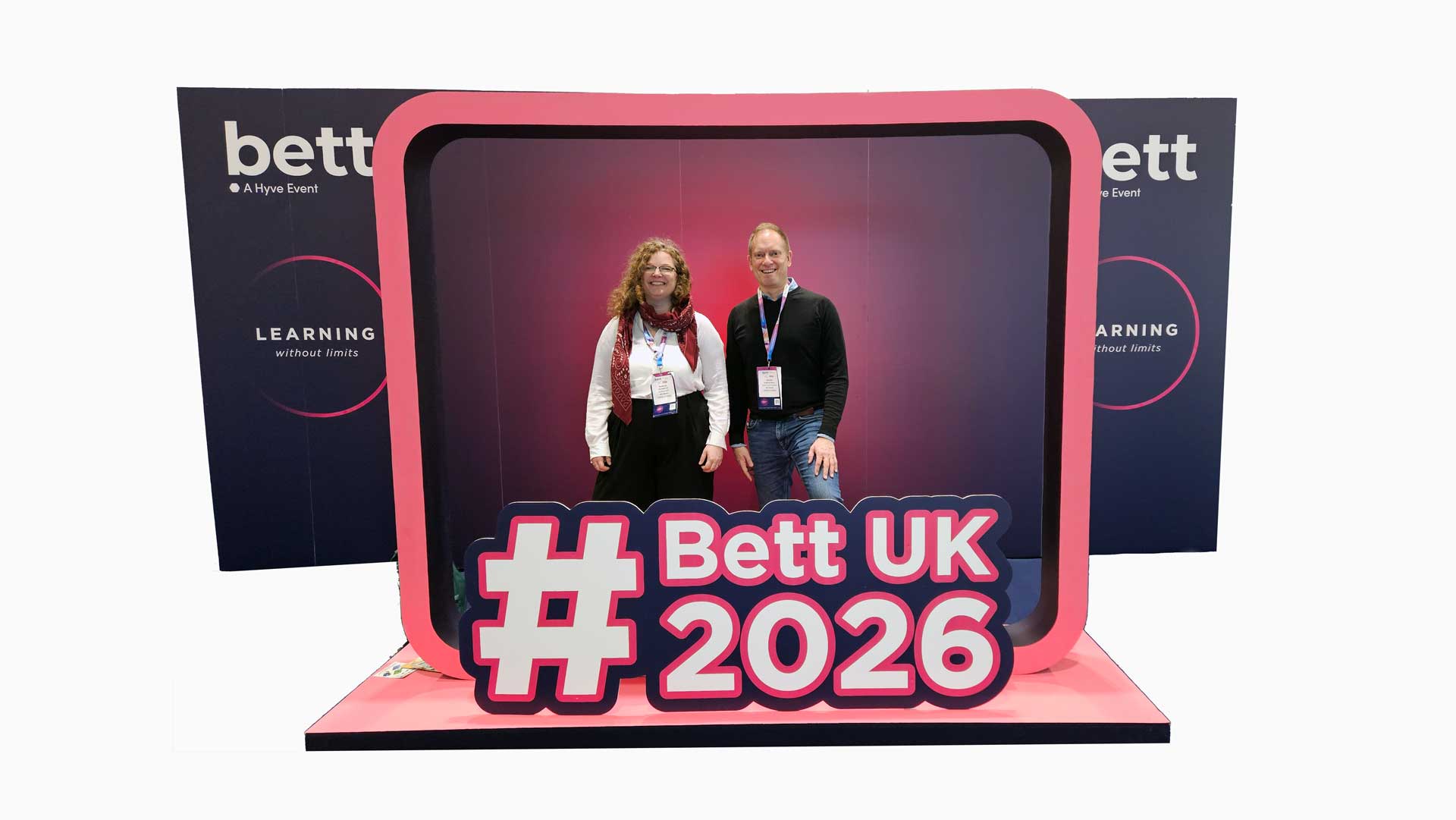
Last week, Bitcraze attended the BETT Show in London to get a better sense of how the education landscape is evolving.

BETT (British Educational Technology Show) brings together educators, edtech companies, curriculum developers, policymakers, and technology providers across the full spectrum of learning: from primary school to higher education and professional training.

For us, it was a valuable opportunity to listen and get an understanding of where the general EDU landscape is and where it is heading.

Meeting Familiar Faces, and New Ones

One of the most rewarding parts of the visit was reconnecting with existing partners already using the CrazyflieTM in educational settings, and meeting new potential collaborators: teachers building robotics programs, universities modernising their lab infrastructure, and organisations developing national STEM (Science, Technology, Engineering, and Mathematics) and STEAM (Science, Technology, Engineering, Art, and Mathematics) initiatives.

A recurring theme in many conversations was the need for platforms that are robust and safe to use in classrooms, scale from simple programming exercises to advanced autonomy and AI, support both structured teaching and open-ended experimentation, and are well documented (both for the teacher and for the student).

These are exactly the problems we have spent more than a decade working on.

What the Education Robotics Market Looks Like Today

Speaking with a wide range of robotics vendors, software providers, and solution integrators gave us a clearer picture of the realities of the K-12 and STEM market:

  • Procurement is often tender-based and highly structured
  • Budgets are tight and price sensitivity is real
  • There are many vendors offering similar-looking robotics kits
  • Hardware is physically robust and classroom-proof and safety is critical
  • Programming is dominated by Python, Scratch, Blockly, or proprietary visual tools
  • “AI-enabled” frequently means GPT-style programming blocks layered on top
  • LEGO compatibility is everywhere
  • micro:bit has effectively become a compelling entry-level control board
  • Buyers apply hard scrutiny to educational value and learning outcomes
  • Real adoption requires curricula, lesson plans, and teacher training programs
  • And in practice, U.S.-developed curricula often transfer reasonably well globally

Why the Crazyflie is a Great Fit for Education

Although the Crazyflie originated as a research platform, its characteristics map naturally to education:

STEM / STEAM (Upper Secondary & High School)

Students can work hands-on with control systems, sensors, wireless communication, programming, and basic AI in a physical system they can see, debug, and iterate on. It makes abstract concepts tangible.

Undergraduate Education

Crazyflie is increasingly used in robotics, embedded systems, and mechatronics courses to teach estimation, control, perception, and multi-agent systems without the overhead of large and expensive hardware.

Post-graduate Research

This remains our strongest domain: swarm robotics, learning-based control, human–robot interaction, indoor navigation, and distributed systems.

The continuity matters. Students don’t outgrow the platform. They grow with it. And, more importantly, the same openness that researchers value is increasingly relevant in education as well (particularly relevant in the light of recent geopolitical movements). Institutions want transparency, long-term maintainability, and the freedom to adapt tools to their pedagogy and not just consume closed kits.

Education is a Strategic Part of the Robotics Ecosystem

BETT confirmed that education is a strategic and structured part of the robotics ecosystem. Not just as “learning about robots”, but as a way to train future engineers, researchers, and system designers using realistic platforms from an early age.

Succeeding in this segment requires more than good hardware. It requires thoughtful packaging, clear educational positioning, proper teaching material, partner ecosystems, and long-term commitment.

To those we met at BETT, thank you for the conversations. And if you are working with STEM, STEAM, or robotics education and are curious about the Crazyflie, we are always happy to talk.

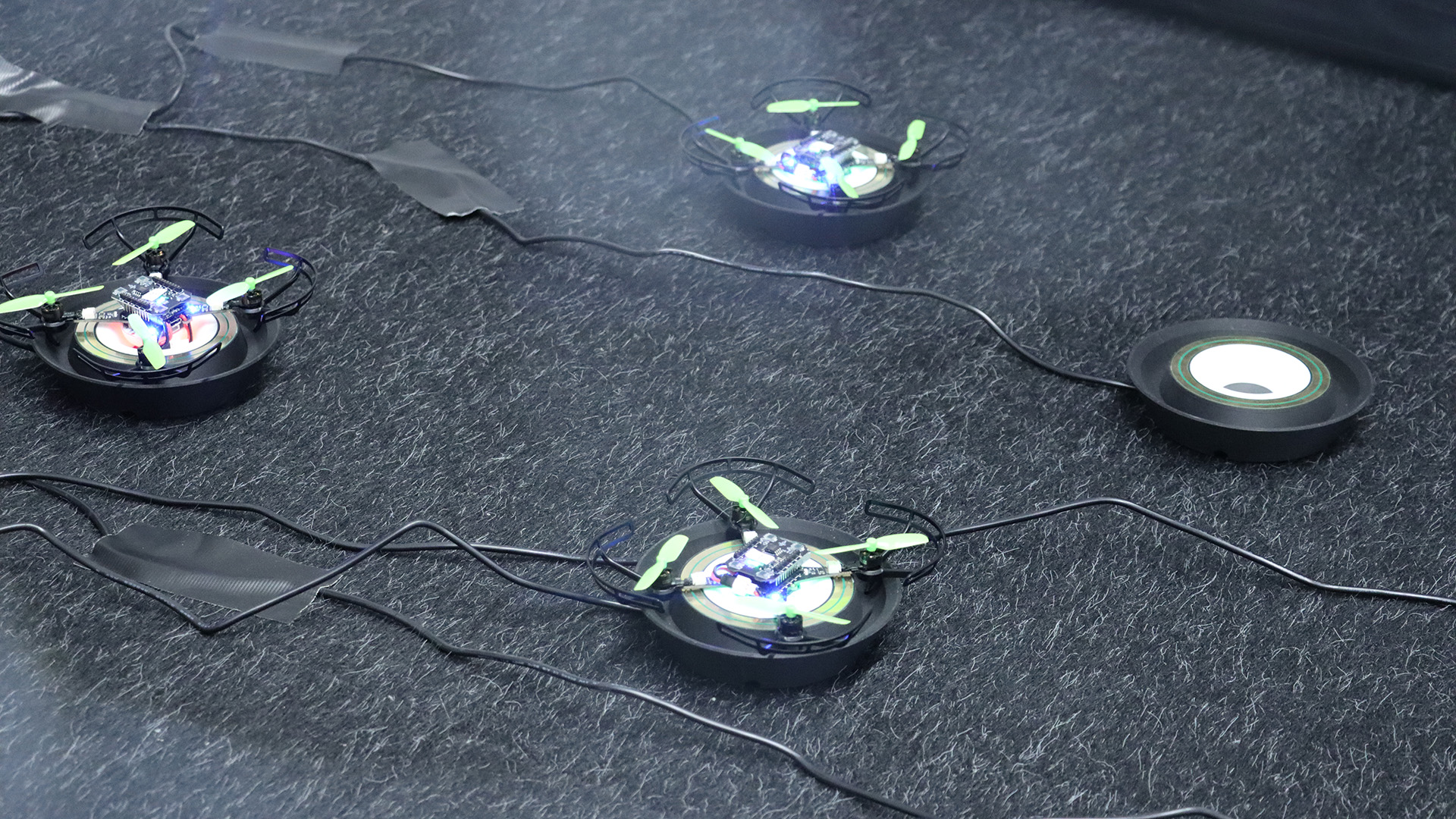
A couple of weeks ago, we were at ICRA 2025 in Atlanta. This year’s ICRA drew over 7,000 attendees, making it the biggest edition yet. We had a booth at the exhibition where we showed our decentralized swarm demo. The setup included a mix of Crazyflie 2.1+ units with Qi charging decks and Crazyflie 2.1 Brushless platforms with our new charging dock. The entire swarm operated onboard, with two Lighthouse base stations for positioning. More details about the setup can be found in the recent swarm demo blog post.

8 Crazyflies flying simultaneously in our decentralized swarm at ICRA 2025

Some of the brushless drones carried our high-powered LED deck prototype to make the swarm more visible and engaging. One of the drones also had a prototype camera streaming deck, which held up well despite the busy wireless environment.

A Different Perspective

This year we were also invited to participate in a workshop: 25 Years of Aerial Robotics: Challenges and Opportunities, where I (Rik) gave a short presentation about the evolution of positioning in the Crazyflie, from webcam-based AruCo marker tracking to the systems we use today.

Usually, we spend most of our time on the exhibition floor, so being part of a workshop like this was a different experience. It was interesting to hear researchers mention the Crazyflie in their work without needing to explain what it is. That kind of familiarity isn’t something we take for granted, and it was nice to see.

The workshop also gave us a chance to talk with both established researchers and newer faces in the field. What stood out most was hearing how people are using the Crazyflie in their work today. It’s very rewarding to see how what we do at the office connects with and supports real research.

Catching Up and Looking Around

One of the most rewarding parts of the conference was the chance to connect directly with people using the platform. We talked to many users, both current and past, and saw new research based on the platform. It was also great to reconnect with Flapper Drones, who build flapping-wing vehicles powered by the Crazyflie Bolt. And it was nice to see HopTo on the exhibition floor for the first time. The company is a spin-off from the Robotics and Intelligent Systems Lab at CityU Hong Kong, which published a Science Robotics paper on the hopcopter concept that used a Crazyflie. We also had the chance to catch up with a maintainer of CrazySim, an open-source simulator in the Crazyflie ecosystem. It’s always valuable to connect with people building on top of the platform, whether through research, hardware, or open-source tools.

Wrapping Up

ICRA 2025 was packed with activity. From demoing the swarm, to the workshop, to hallway conversations, it gave us a lot of valuable feedback and insight. Thanks to everyone who stopped by, joined a talk, or came to say hello.

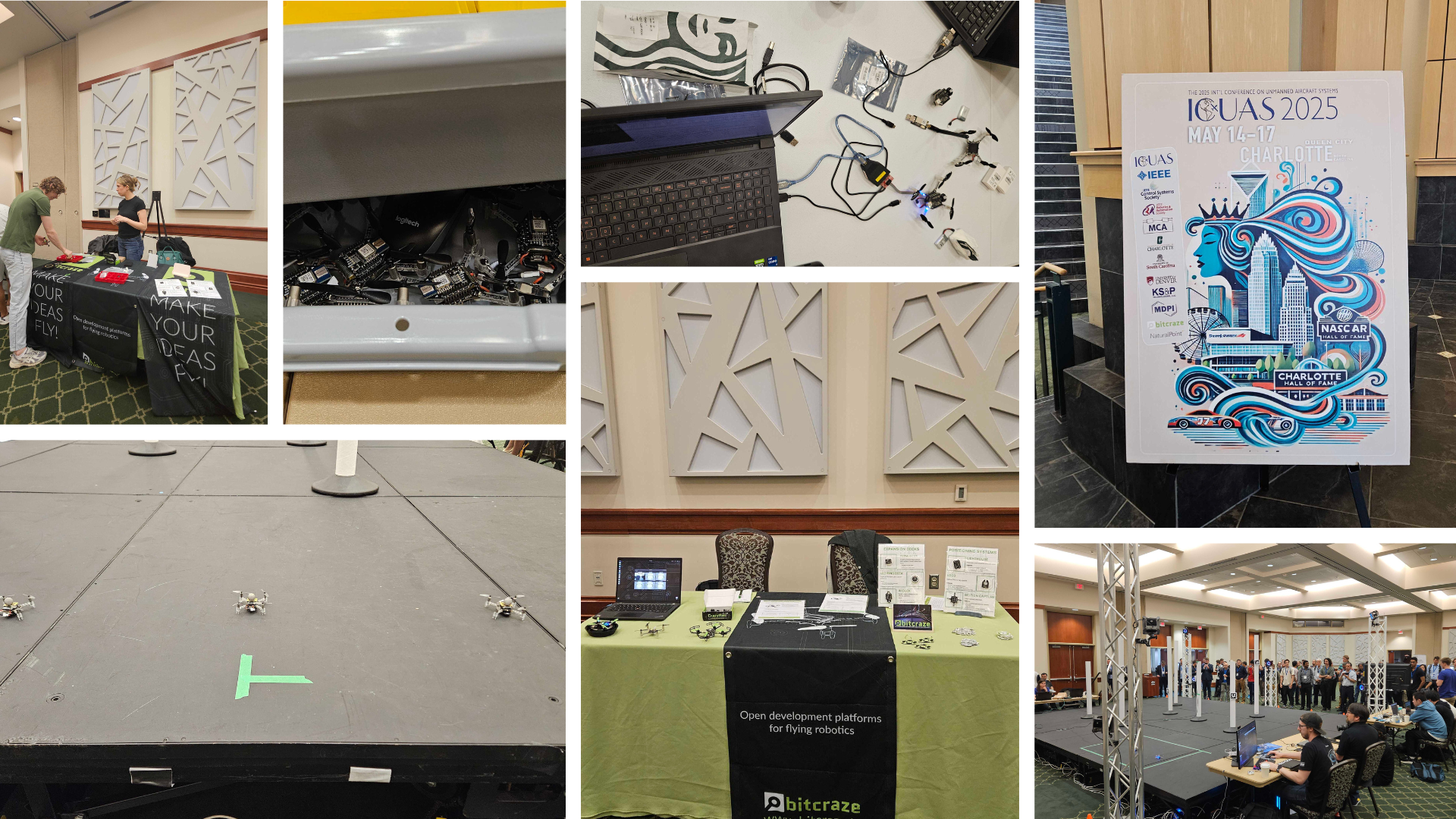
As we mentioned in a previous blog post, the last couple of weeks have been full of exciting events in the US. We first began our adventure in Charlotte, North Carolina, where we attended the International Conference on Unmanned Aircraft Systems (ICUAS), as platinum sponsors.

We were especially thrilled to be involved because the final stage of the conference’s competition featured Crazyflies, which played a central role in the challenge.

The ICUAS UAV Competition

This year’s competition simulated a search mission in an urban environment. The goal was for teams to identify ArUco markers placed on multiple obstacles, while maintaining line-of-sight and communication among a swarm of three Crazyflies.

Each team’s UAVs launched from a designated base, navigated a known environment, and attempted to locate several targets. The drones relied on an OptiTrack system for positioning and used the AI deck as a camera for image recognition. Constant communication between the base and all UAVs was required throughout the mission.

The event, organized by the LARICS team, combined both simulation and real-world implementation. Their hard work ensured that competitors could smoothly transition their systems from digital models to actual flying drones. What followed was an intense and fun two-day hackathon.

Although the ICUAS UAV Competition drew interest from 26 teams globally, only five finalist teams made it to Charlotte to run their scenarios with real drones. In the end, it was Team Aerial Robotics from the Indian Institute of Technology Kanpur (IITK) who took home first place—congratulations to them!

While the event went smoothly overall, some communication challenges cropped up—solved creatively by placing a radio in the center of the arena. Battery management was also key, with fully charged packs being a hot commodity to maximize flight time.

Research and Presentations

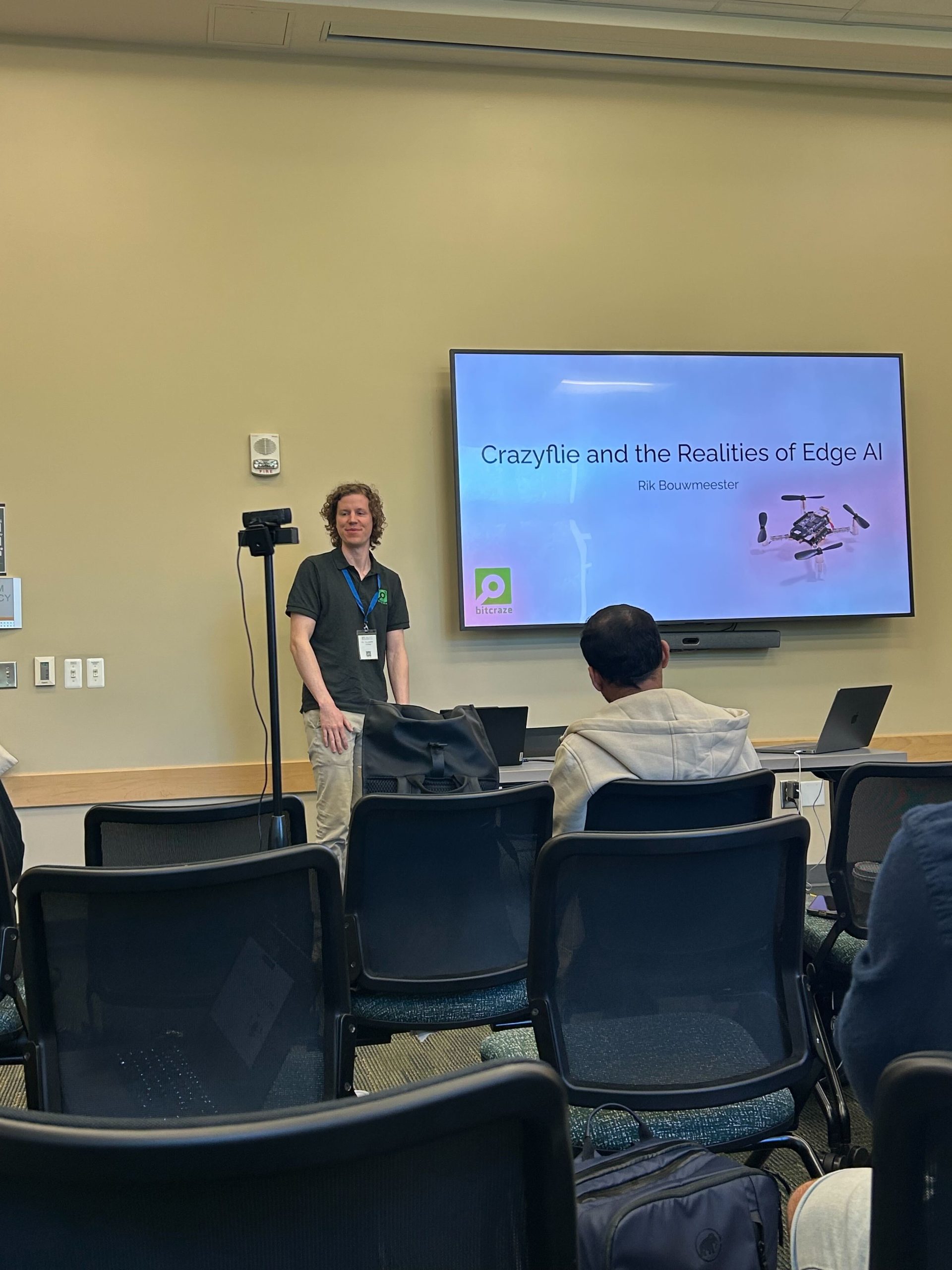
Alongside the competition, the conference featured a wide range of research presentations. We were proud to see Rik present on the AI deck during a workshop focused on embodied AI.

One of the highlights was the Best Paper Award, which—although we missed the talk, was awarded to a team from Queen’s university using the Crazyflie to simulate drone landings on ocean waves. You can read their fascinating paper here:
https://arxiv.org/abs/2410.21674

Final Thoughts

Overall, ICUAS 2025 was a great experience—full of innovation, collaboration, and of course, plenty of flight time. We’re grateful to the organizers, competitors, and everyone who stopped by our booth. Until next time!

This week in Germany

This week, some of us are on an adventure!
Marcus and Tobias will be exploring both the RIG and Embedded World fairs.

RIG showcases the latest innovations in robotics and intelligent systems, while Embedded World is the place to be for cutting-edge embedded technologies. Both events promise amazing demos, insightful talks, and a chance to catch up with some of our collaborators.

Planning to attend either fair? Let’s meet up! We’d love to explore the exhibitions together, chat about cool technologies, or just geek out about the innovations on display. We’ll be wandering through Embedded World on Thursday and hitting RIG on Friday. Send us an email if you’d like to connect – we’re always up for grabbing coffee!

Next May in Atlanta

After our adventures as visitors, we’re thrilled to announce that we’ll be exhibiting at the International Conference on Robotics and Automation (ICRA) 2025! Stop by our booth where we’ll be showcasing our latest demo. We’ll be, as always, available to discuss our newest products, answer your technical questions, and provide insights into how our solutions can transform your robotics applications. We’re also eager to hear your thoughts on what you’d like to see in our upcoming products. Mark your calendars and make sure to find us at Booth #131 – we may even have some presentations in the work, but nothing confirmed yet.

Today in the shop

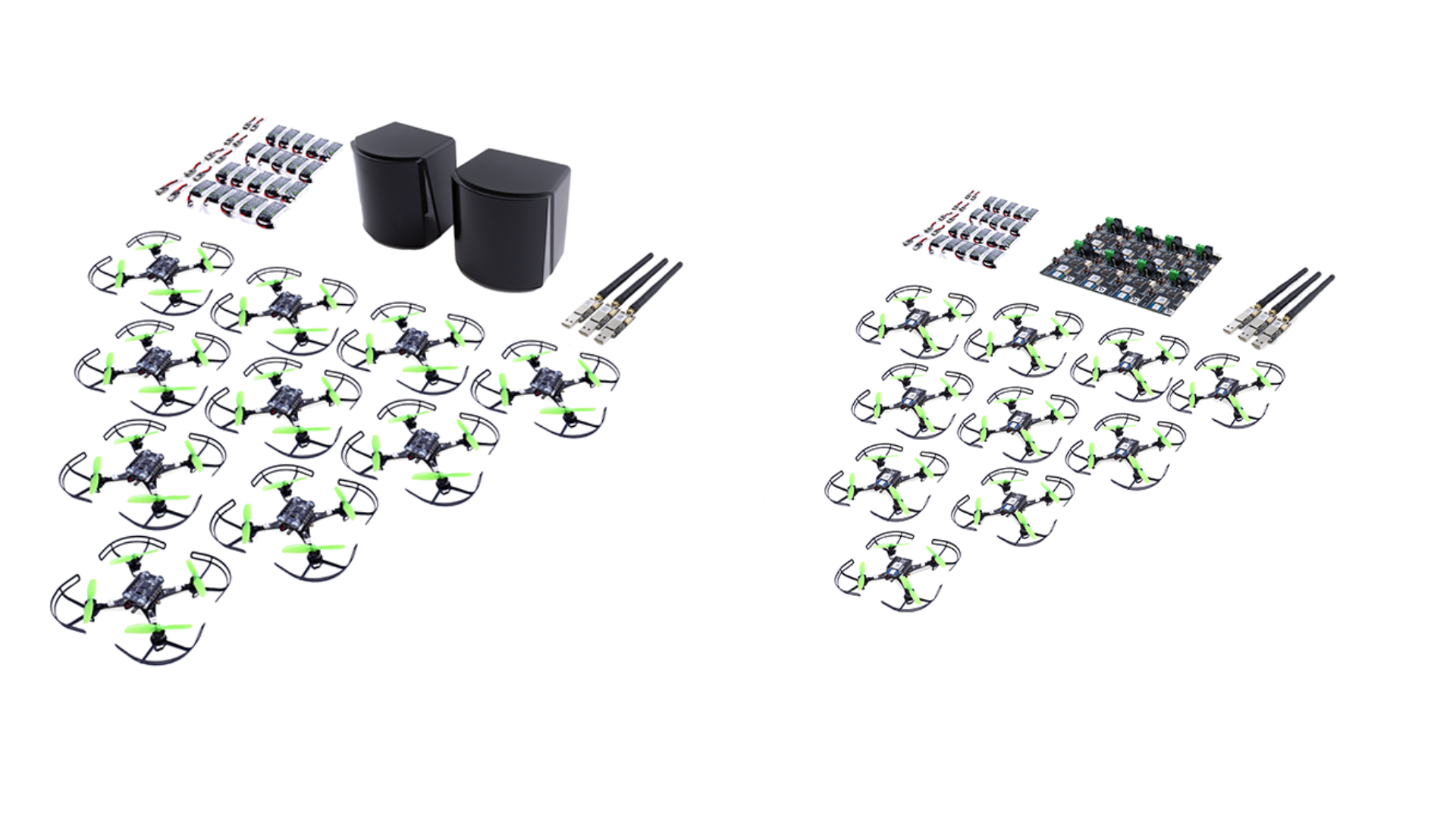
And, last but not least, the Brushless is now available in a Swarm configuration! Both the Lighthouse Swarm bundle and Loco Swarm bundle have been added to our shop. These new bundles feature all the same components as our standard Swarm packages, but come equipped with the Crazyflie 2.1 Brushless instead of the Crazyflie 2.1+ model.

Whenever we show the Crazyflie at our booth at various robotics conferences (like the recent ICRA Yokohama), we sometimes get comments like ‘ahh that’s cute’ or ‘that’s a fun toy!’. Those who have been working with it for their research know differently, but it seems that the general robotics crowd needs a little bit more… convincing! Disregarding its size, the Crazyflie is a great tool that enables users to do many awesome things in various areas of robotics, such as swarm robotics and autonomy, for both research and education.

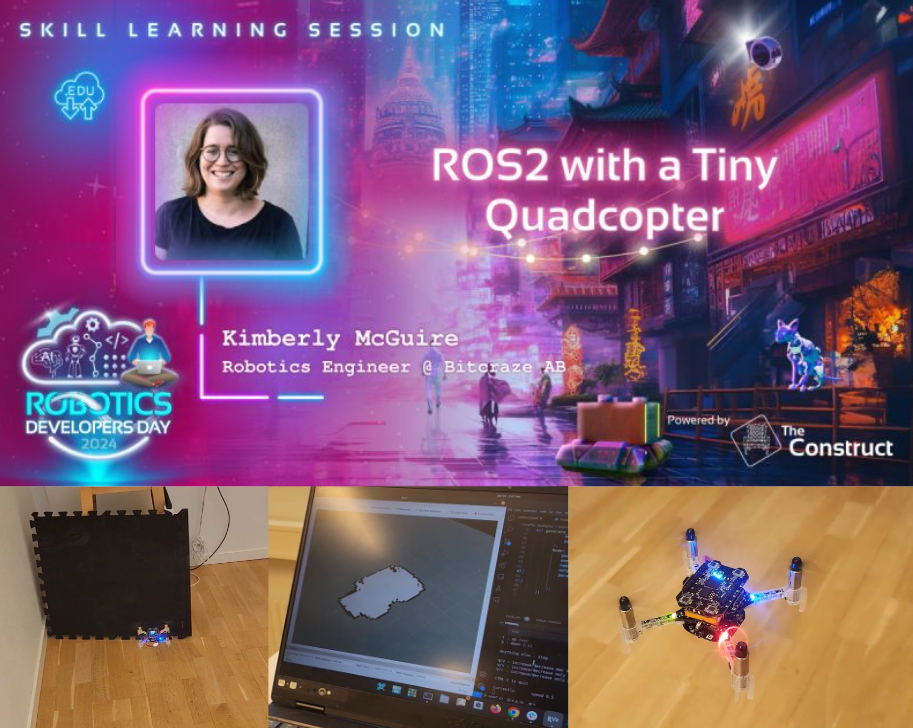
We will be showing that off by giving a live tutorial and demonstration at the Robotics Developer Day 2024, which is organized by The Construct and will take place this Friday, 5th of July. We have a discount code for you to use if you want to get a ticket; scroll down for details. The code can be used until 12 am midnight (CEST) on the 2nd of July.

The Construct and Robotics Developer Day 2024

So a bit of background information: The Construct is an online platform that offers various courses and curriculums to teach robotics and ROS to their users. Along with that, they also organize all kinds of live training sessions and events like the Robotics Developer Day and the ROS Awards. Unfortunately, the deadline for voting in the latter has passed, but hopefully in the future, the Crazyflie might get an award of its own!

What stands out about the platform is its implementation of web-based virtual machines, called ‘ROSJects,’ where ROS and everything needed for it is already set up from the start. Anyone who has worked with ROS(2) before knows that it can be a pain to switch between different versions of ROS and Gazebo, so this feature allows users to keep those projects separate. For the ROS Developer Day, there will be about five live skill-learning sessions where a ROSject is already preconfigured and set up for the attendees, enabling them to try the tutorial simultaneously as the teacher or speaker explains the framework.

Skill learning session with the Crazyflie

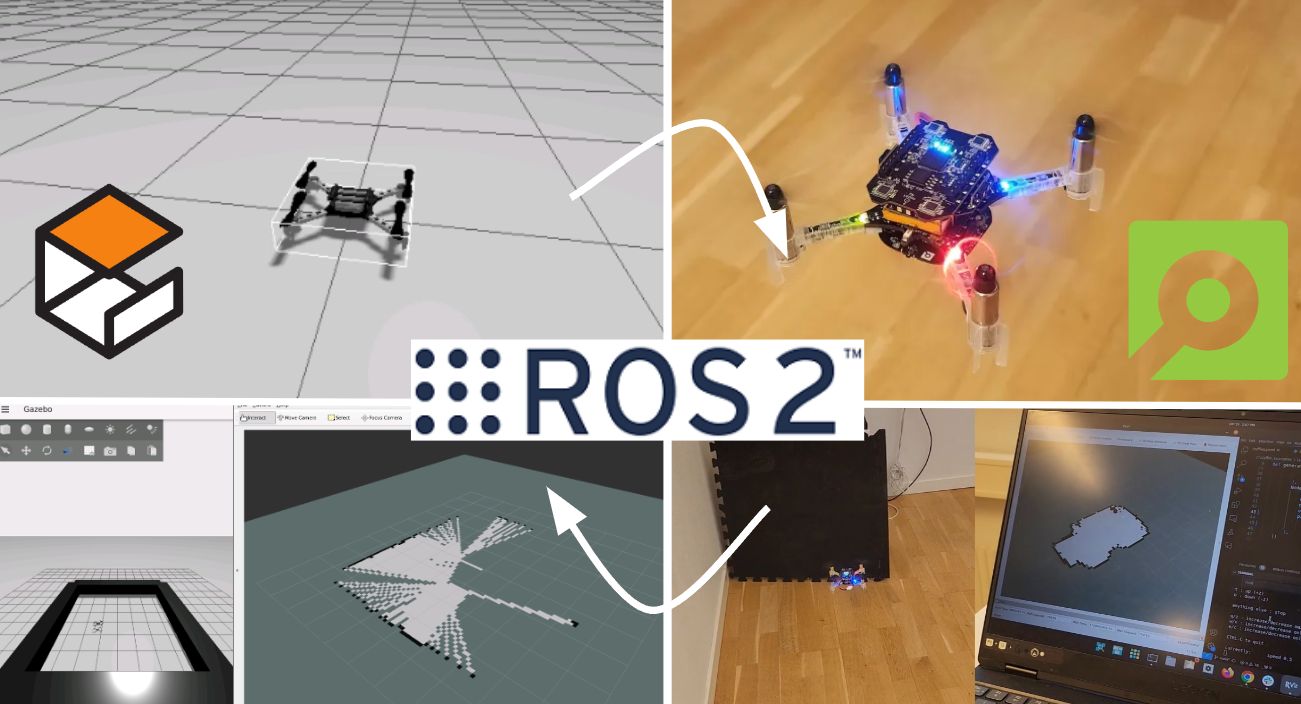
One of the earlier mentioned skill learning sessions is, of course, one with the Crazyflie! The title is “ROS 2 with a Tiny Quadcopter,” and it is currently planned to be the first skill learning session of the event, scheduled at 15:15 (3:15 pm) CEST. The talk will emphasize the use of simulation in the development process with aerial robotics and iterating between the real platform and the simulated one. We will demonstrate this with a Crazyflie 2.1 equipped with a Lighthouse deck and a Multi-ranger deck. Moreover, it will also use a Qi-charging deck on a charging platform while it patiently waits for its turn :D

What we will be showing is a simple implementation of a mapping algorithm made specifically for the Crazyflie’s Multiranger deck, which we have demonstrated before at ROSCon Kyoto and in the Crazyswarm2 tutorials. What is especially different this time is that we are using Gazebo for the simulation parts, which required some skill learning on our side as we have been used to Webots over the last couple of years (see our tutorial for that). You can find the files for the simulation part in this repository, but we do advise you to follow the session first.

You can, if you want, follow along with the tutorial using a Crazyflie yourself. If you have a Crazyflie, Crazyradio, and a positioning deck (preferably Lighthouse positioning, but a Flowdeck would work as well), you can try out the real-platform part of this tutorial. You will need to install Crazyswarm2 on a separate Ubuntu machine and add a robot in your ROSject as preparation. However, this is entirely optional, and it might distract you from the cool demos we are planning to show, so perhaps you can try this as a recap after the actual skill learning session ;).

Here is a teaser of what the final stage of the tutorial will look like:

Win a lighthouse explorer bundle and a Hands-On Pass discount

We are also sponsors of the event and have agreed with The Construct to award one of the participants a Crazyflie if they win any contest. Specifically, we will be awarding a Lighthouse Explorer bundle, with a Qi deck and a custom-made charging pad similar to the ones we show at fairs like ICRA this year. So make sure to participate in the contests during the day for a chance to win this or any of the other prizes they have!

It is possible to follow the event for free, but if you’d like to participate with the ROSjects, you’ll need to get a hands-on pass. If you haven’t yet gotten a hands-on ticket for the Robotics Developer Day, please use our 50% off discount code:

19ACC2C9

This code is valid until the 2nd of July, 12 am (midnight) Central European Time! Buy your ticket on the event’s website: https://www.theconstruct.ai/robotics-developers-day/

RSS 2024 aerial swarm workshop

On a side note, we will be at the Robotics: Science and Systems Conference in Delft from July 15th to 19th, 2024—just about two weeks from now. We won’t have a booth as we usually do, but we will be co-organizing a half-day workshop titled Aerial Swarm Tools and Applications (more details on this website).

We will be organizing this workshop together with our collaborators at Crazyswarm2, as well as the developers of CrazyChoir and Aerostack2. We’re excited to showcase demos of these frameworks with a bunch of actual Crazyflies during the workshop, if the demo gods are on our side :D. We will also have great speakers, including: SiQi Zhou (TU Munich), Martin Saska (Czech Technical University), Sabine Hauert (University of Bristol), and Gábor Vásárhelyi (Collmot/Eötvös University).

Hope to see you there!

ICRA Yokohama

From the beginning of the company, we’ve always loved to join in at conferences. Only at a conference do you get the opportunity to show our products, meet our users or other tech-oriented people, learn about what others are doing, and let’s not forget the chance to discover a new place!

This year, we’ll be present at ICRA Yokohama – it’s in just 3 weeks. We’ll have a booth there (IC085 if you’re looking for us). We’ll be showing our autonomous demo with a twist just like we have shown last time, so please check the event page. This demo is extremely impressive and we’ve been improving on it each time we’ve shown it – beginning in our latest Japan trip and lastly at the last ICRA too. What’s new?

We’re really excited to be showing that and receive feedback, but also in hearing about what our users have been doing. ICRA is always a perfect place to catch up on all the amazing papers and publications featuring our hardware, and we couldn’t be prouder of all the cool stuff we’ve seen so far. We’re so proud, in fact, that we want to be able to show off! So, if you have a paper or a publication featured at ICRA, let us know – you can write us an email at contact@bitcraze.io, leave a comment below this post, or pass by our booth.

In fact, we’re prepared to make a deal. If you have a nice poster featuring our products and don’t know what to do with it once you’ve presented it, pass by our booth! We’re ready to swap them for something extra special. We plan to have a “hall of fame” at the office featuring your awesome work – in fact, it’s an idea we had last ICRA when someone just offered us their posters. Now, we’d like to cover our walls with them!

The corridor leading to the kitchen – we have space to show off the awesomeness!

So, whether you’re a seasoned conference-goer or a first-time attendee, don’t hesitate to wsing by our booth, say hello, and discover our newest demo! We hope to see you there.

Dev meeting

Next developer meeting is going to be on the 8th of May – we traditionally have a dev meeting every first Wednesday of the month, but this time it happens to be on the 1st of May which is a holiday here in Sweden. So already prepare your calendar for the 8th of May at 15.00 CET, and stay tuned for more info on which topic we’ll talk about!

Crazyflies back in stock !

You may have noticed that the Crazyflies have been out of stock for some time now. After some adventures, we are now fully back in stock with most of our bundles and products available in the shop!